The video game RPG genre owes its existence to tabletop games. If it weren’t for developers trying to recreate their Advanced Dungeons & Dragons games on their PCs, so much of the industry wouldn’t exist. Even the terminology of gaming is tied to that of the world of fantasy dice rolling, with the phrase NPC entering common parlance thanks to video games.
Back then, hardware limitations were so severe that the RPGs of the day had to be incredibly basic to squeeze even the most basic of experiences into a computer. Bringing a full D&D world into a game seemed impossible, but at the start of the 2000s, one developer proved it could be done.
Baldur’s Gate 2: Shadows Of Amn Brought Dungeons & Dragons To Computers

While the original Baldur’s Gate was a fine game in its own right, it wasn’t exactly the easiest entry point for people new to the RPG genre. This was due to it using the Advanced Dungeons & Dragons rules, also known as second edition among fans, which were notoriously tricky to learn and brutal towards new characters.
Baldur’s Gate was tricky to learn for new players, especially anyone who wanted to play a Mage or a Thief, as pretty much everything in the game could kill their character in a single hit. It doesn’t help that the early dungeons were incredibly cheap, being filled with deadly traps and enemies that waited just behind the Fog of War with bows trained on the party, ready to instakill the group if they had some bad rolls.
It’s advised that people ignore the first game and skip straight to Baldur’s Gate 2: Shadows of Amn. As a direct continuation, Baldur’s Gate 2 starts the party off at around level 7, meaning the characters were a lot beefier and had access to more magic. This meant they could survive fights against enemies without worrying about being turned into chowder in the first round of combat.
The higher starting level also meant that Baldur’s Gate 2 could skip to more interesting stories. Even by the ‘90s, fans were sick of the basic fantasy RPG scenarios and enemies: goblins in caves, orcs in swamps, zombies in graveyards.
Baldur’s Gate 2 skipped all that, starting the player off in a dungeon filled with magical medical experiments, where horrific creatures awaited around every turn. The higher starting level meant the game could use far more exciting and interesting scenarios.
Starting in the sprawling city of Amn, the player is caught up in a struggle between a shadowy thief’s guild and a murderous group of vampires. Soon, players are exploring beyond the boundaries of the city, helping to free a castle from an invading army of monsters.
From there, players will find themselves facing dragons in their lairs, exploring the temples of forgotten gods, and facing cults that worship the most vile beasts in Dungeons & Dragons. Everything comes together to make Baldur’s Gate 2 a must-play RPG and a genuine masterpiece.
Baldur’s Gate 2 Takes The Bhaalspawn Saga In An Unusual Direction

The story of Baldur’s Gate is referred to in Dungeons & Dragons as the Bhaalspawn Saga. The player character is the child of Bhaal, the God of Murder, who, ironically, was killed. This happened during the Time of Troubles, when the gods were turned into mortals for a brief time.
After learning of his own prophesied death, Bhaal impregnated numerous mortals, passing a small spark of divinity into them, in the hopes that he could be reborn from the last survivor. The protagonist learns of the circumstances of their birth in the original Baldur’s Gate, where they gradually start to activate their divine powers throughout the story.
The events of the first game culminate in a showdown with Sarevok, a fellow Bhaalspawn and a mighty warrior in his own right. Upon completing Baldur’s Gate, it’s easy to guess that the sequel would involve the protagonist’s quest to become even more powerful and learn more about their origins.
However, Baldur’s Gate 2 goes in a drastically different direction, with the mighty Bhaalspawn protagonist waking up in a cell, having been stripped of their powers. That willingness to surprise players is one of the reasons Baldur’s Gate 2 is still one of the greatest PC RPGs of all time.
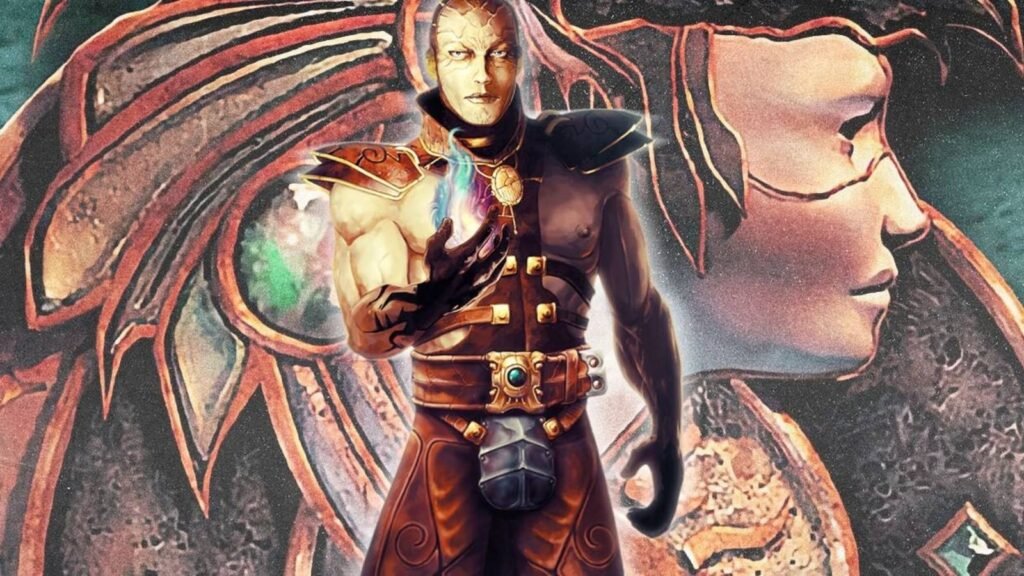
Between the events of the first two games, the protagonist had been kidnapped by a powerful elven mage, named Jon Irenicus, who steals the power and soul of the Bhaalspawn. It’s also revealed that Imoen, the player’s staunch ally from the first game, is also a Bhaalspawn, and Irenicus wants to use her power for his sister.
Baldur’s Gate 2 takes some shocking turns with its story, with Irenicus and Imoen being arrested at the start of the game and taken to Spellhold, a foreboding fortress for magical criminals. The first Act of Baldur’s Gate 2 is all about acquiring the money needed for a trip to Spellhold, to save Imoen and defeat Irenicus.
As it turns out, the framing device of needing the cash for the Spellhold trip is a great one, since it gives players a reason to complete all of the quests in Amn. Not only do they need money for Spellhold, but cash is necessary to deck out the cast with the equipment that is necessary to survive the monsters they’ll meet on the way.
The story doesn’t end in Spellhold: far from it. Baldur’s Gate 2 involves a trip to the Underdark, the most fearsome area in the Forgotten Realms, where they’ll visit a Drow city, which will excite anyone who has read the popular Drizzt Do’Urden novel series.
In fact, Drizzt and his allies are waiting for the Bhaalspawn upon leaving the Underdark, where they can help them deal with the vampires awaiting in Amn. The story of Baldur’s Gate 2 is like a “Best Of” of Dungeons & Dragons encounters, with trips to dungeons and fights against monsters that rarely appeared in the game.
Baldur’s Gate 2 Was A Pioneer In Party Dynamics

Anyone attempting a solo run in Baldur’s Gate 2 is in for a lot of pain, as the game is balanced around a party of six adventurers. Luckily, Baldur’s Gate 2 is full of amazing characters who will stand beside the Bhaalspawn on their adventure.
One of the most well-remembered parts of Baldur’s Gate 2 is its party members, with characters like Minsc and Boo entering the wider Dungeons & Dragons canon due to their popularity. Baldur’s Gate 2 gives each party member a ton of dialogue and unique quests, giving the player plenty of reasons to care about them.
Baldur’s Gate 2 also featured romance options, a rarity at the time. There were only a handful of options, and they were pretty buggy at launch, but people surprisingly took to them. In fact, it helped kick off the mod scene, as players created their own romance mods, especially to make up fr the lack of LGBTQIA representation in the core game.
So many RPGs feature forgettable characters who exist only to fill specific roles. The developers needed people to fill out the tank, sneak, glass cannon, and healer roles, so they made characters to fill them.
Baldur’s Gate 2 heroes feel like real people, and players liked them so much that they wanted to use them in their party, even if they sucked in battle or didn’t match the group’s composition, which is the highest compliment you can give to a Dungeons & Dragons character.
Throne Of Bhaal Let Players Finish The Fight

It might be cheating to count the Throne of Bhaal expansion as part of Baldur’s Gate 2, but it’s essential for completing the experience. Throne of Bhaal is a direct continuation of the story of Baldur’s Gate 2, with an all-out war breaking out between the Bhaalspawn, as the strongest marshal their forces for the final conflict.
Throne of Bhaal offers something that even Baldur’s Gate 3 didn’t even attempt: a high-level Dungeons & Dragons campaign. It’s here where players get to experience the terrifying might of 9th-level spells and epic abilities, as they carve their way through demons, angels, and dragons.
This expansion offers an epic resolution to the story of the Bhaalspawn, one that has taken the player countless hours to reach, especially if they carried their character over from the original game. The story ends with the decision of whether the player character will inherit Bhaal’s position as the God of Murder, or reject divinity and walk their own path.
In the end, the choice doesn’t matter outside of player satisfaction. According to Dungeons & Dragons lore (and confirmed in Baldur’s Gate 3), Bhaal returns years later, empowering cults in the modern era. That said, it’s about the journey, not the destination. Baldur’s Gate 2 is a masterpiece, one whose quality remains evident 25 years later.
While Baldur’s Gate 3 is one of the best RPGs of the last 10 years, it exists because it stands on the shoulders of giants. The story of the Bhaalspawn Saga is unforgettable, and it’s something people who loved the tale of Tav should check out.

Baldur’s Gate 2: Enhanced Edition


- Released
-
November 15, 2013
- ESRB
-
t
- Developer(s)
-
Overhaul Games
- Publisher(s)
-
Atari
- Engine
-
Infinity Engine
- Multiplayer
-
Online Multiplayer, Local Multiplayer
- Franchise
-
Baldur’s Gate