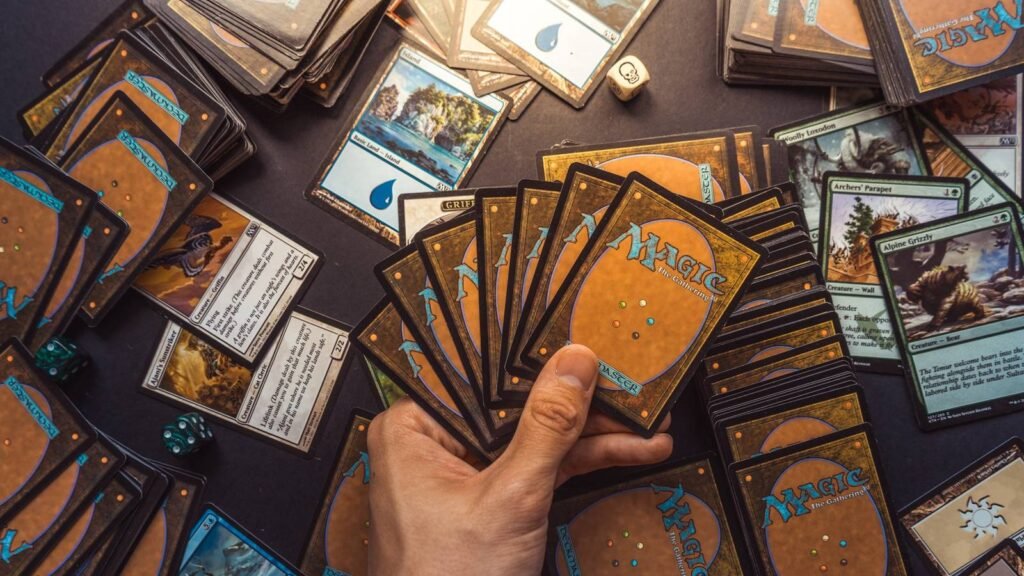
Magic: The Gathering has been around for over 30 years, and in that time, cards have been banned for offensive content as sensibilities have changed. Some cards have artwork that means they’ll never get reprinted, like the incredibly suggestive Earthbind, which has been left out of anniversary sets.
Some of these cards are still technically legal in specific formats, but others are so bad that they’ve been removed from all sanctioned tournaments, regardless of format. The most offensive cards of all time can’t even be seen on official Magic: The Gathering websites anymore.
Invoke Prejudice Is One of the Most Controversial MTG Cards Ever

Where to even start with Invoke Prejudice? Not only does this four-blue cost Enchantment depict soldiers that are clearly inspired by real-life racist organizations, but its effect involves forcing the opponent to pay extra if they play a creature that doesn’t match the color of one of the Invoke Prejudice’s caster’s monsters.
It’s easy to see why Invoke Prejudice would be banned so severely from Magic: The Gathering, as pretty much every aspect of the card is offensive. This is one aspect of the game’s history that needs to stay buried.
Cleanse Is a Card Wizards of the Coast Wants to Erase

The artwork for Cleanse isn’t objectionable on the surface, as it shows a tornado destroying an army of monsters. It’s common for board wipe cards to depict a massive spell going off that annihilates an entire army of monsters, to reflect its in-game effect.
No, the reason Cleanse was removed from the game was that it was a white card with an effect that specifically destroyed only black creatures. Throw in the name, and it’s clear why Wizards of the Coast wants to forget that this card ever existed.
Crusade Is an MTG card That References Real-Life Events

White cards in Magic: The Gathering commonly depict knights and religious imagery, especially angels, as it’s a core part of the color’s creature identity. As such, it’s not too surprising to see Christian iconography in their artwork, especially in the early days. However, the Crusade card took things a little too far.
As its name suggests, this card references real-life holy wars, with a village burning in the background, likely due to the actions of an invading army. The card’s name, coupled with the crosses worn on the knights’ tabards, shows what the intention was with the Crusade, which ultimately led to its ban.
Imprison Is Too Violent for Magic: The Gathering

Imprison was banned for a few reasons. The first of which is its depiction of torture, with a person wearing a metal mask that is locked onto their face, while they’re being electrocuted, while wearing few or little clothes. The fact that the person depicted in the card is dark-skinned also has some upsetting real-life implications.
Magic: The Gathering often features cartoonish violence or depicts moments just before something violent happens, but Imprison is a little too close to the brutality that happens in real life. While Wizards of the Coast could have given the card new artwork that was less offensive, they opted to ban it instead.
Jihad Is a MTG Card With Unfortunate Implications

Jihad is similar to Crusade in terms of why it’s considered offensive, being a realistic depiction of a religious war, the kind that has happened throughout history. While the artwork isn’t as on the nose as Crusade, it’s clear what the artist’s intentions were, especially considering that it was released as part of the Arabian Nights set.
The main difference between Crusade and Jihad is that the latter is based on Islam. The effect also has unfortunate implications, with Jihad needing to leave the field if the opponent no longer controls a card with a color selected by the caster. Some Magic: The Gathering sets did everything right, but Arabian Nights was mired in controversy.
Pradesh Gypsies Has an Offensive Name

Straight off the bat, this card has an offensive slur in the title, which would be enough to get it banned from a lot of modern media. Not only is it in the title, but it’s also listed as the creature’s type, suggesting that it would react to effects that select Kindred/Typal from available options.
The flavour text is also a huge strike against the card, presenting the Romani people as some kind of mystical and mysterious people, othering them in the text. On top of that, the artwork presents a stereotypical depiction of the Romani people, which makes the card’s name even worse.
At the time the card was released, those kinds of stereotypes were all too common in tabletop RPGs at the time, such as the Vistani in Dungeons & Dragons, or Clan Ravnos in Vampire: The Masquerade. Gaming has moved away from many of these outdated tropes, and that’s a good thing.
Stone-Throwing Devils Is More Offensive Than It Seems

The issue with Stone-Throwing Devils might not seem apparent at first. The creatures in its artwork are clearly not human, and while they aren’t wearing many clothes, they’re wearing the same as a character like Conan the Barbarian would on the cover of a comic book.
The problem with Stone-Throwing Devils is that its name is a commonly used slur against people in the Middle East. It makes sense why it would be taken out of Magic: The Gathering at the same time as cards like Crusade and Jihad.
While it’s not the most offensive Magic: The Gathering card of all time, it was removed at a time when the game was distancing itself from some of the more thoughtless cards of the early days. Stone-Throwing Devils isn’t a card that broke MTG in half, but Wizards of the Coast was right to remove it.