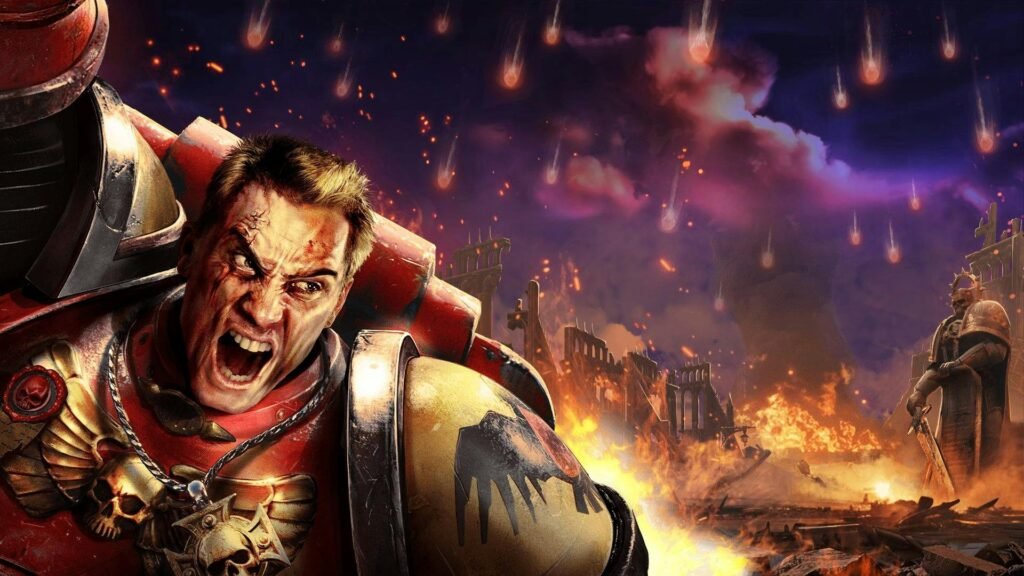
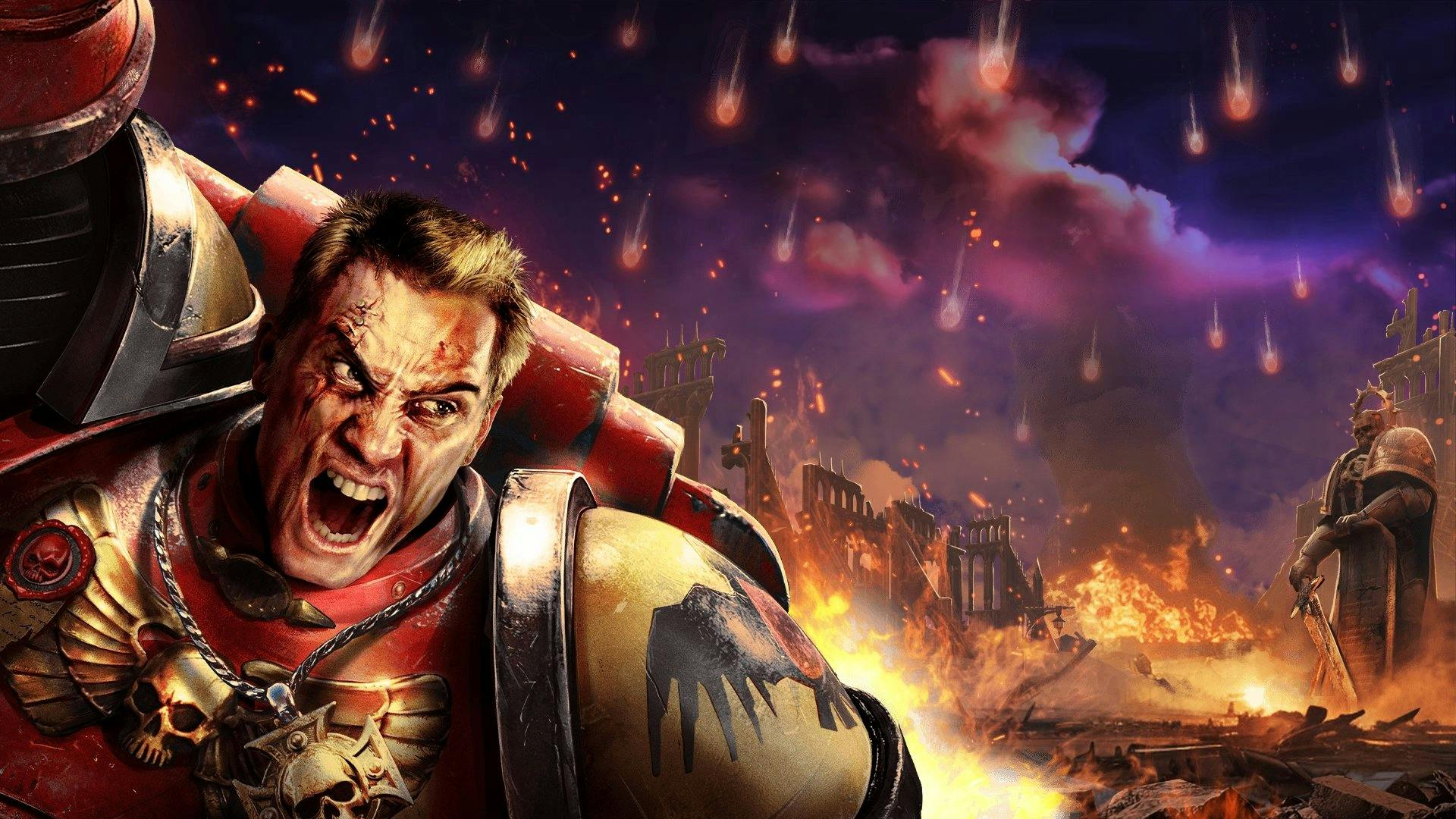
Remasters are a tricky thing: sometimes they give a second life to classics, as in the case of The Elder Scrolls IV: Oblivion. Sometimes they raise more questions than admiration, as with the reissue of Neverwinter Nights 2. Meanwhile, Obsidian is not only reviving the past, but also building the future — with an ambitious Avowed and the expected The Outer Worlds 2, which should prove that the studio hasn’t lost its drive yet. But today we’re going to talk about the return to the dark worlds Warhammer 40,000 — where the remaster tries to prove that the classics are still capable of sounding at their fullest — in the name of the Emperor! Did it succeed? Let’s find out in our review.
Warhammer 40,000: Dawn of War — Definitive Edition
Pluses:
The re-release contains the original game and all addons; support for modern hardware and multiplayer; dynamic and intuitive gameplay; improved unit movement and smooth camera operation; rich lore and various factions; pleasant nostalgia for fans of the series.
Minuses:
cosmetic changes are not always of high quality; some addons may feel weaker or less interesting compared to the original game; the AI of the opponents remains unchanged; some animation bugs and technical issues are reminiscent of the old engine; no new content or additional materials have been added; there are no achievements on Steam, so collectors and fans of achievements may be disappointed.
Warhammer vs. StarCraft vs. Warcraft
When it comes to the RTS genre, Warhammer 40,000: Dawn of War, StarCraft, and Warcraft were the three “whales” of the 2000s, but each followed its own path. Warhammer did not copy Blizzard’s formula, relying on a gloomy universe and a tactical component: controlling the territory is important here, not building “economic pyramids”.
StarCraft became the champion of eSports thanks to the perfect balance of the three races, which was studied like chess. In comparison, Warhammer looked less sophisticated but more spectacular and brutal: instead of micro-control and macroeconomics, it was a struggle for positions and strategic points. This is no longer chess, but a gladiatorial arena.
Warcraft III, on the other hand, introduced the “hero RTS” where characters grew and received items, effectively giving birth to the MOBA genre. In Dawn of War, squad heroes were only supportive, not the center of the game. This emphasized the army, not a single character.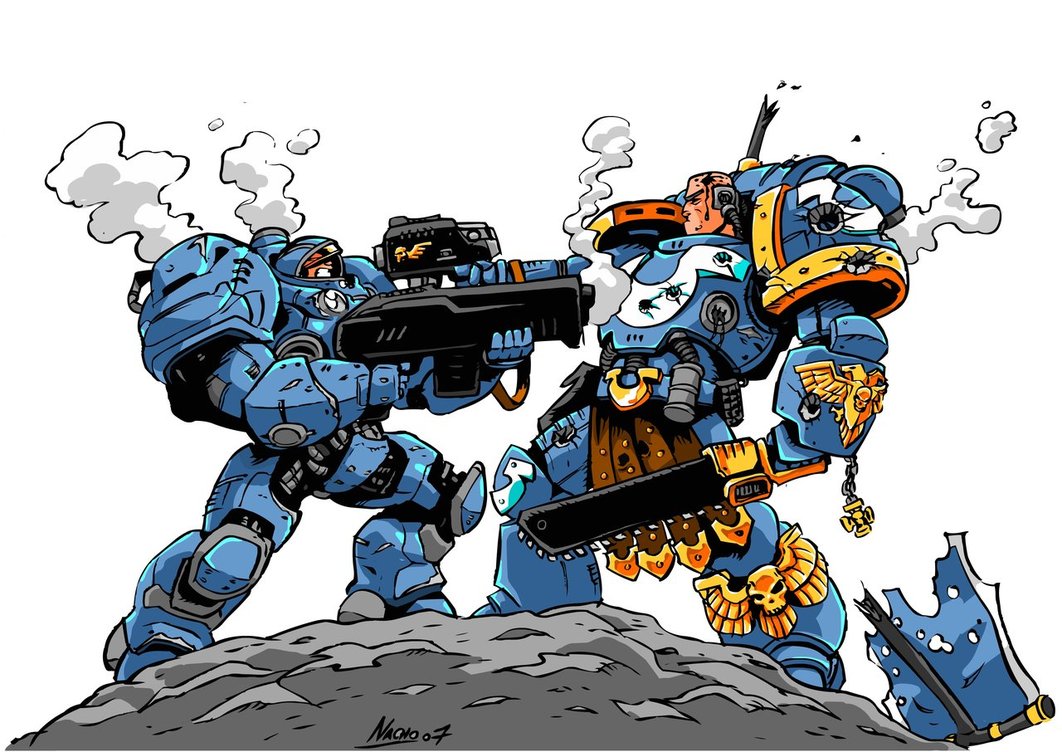
StarCraft served up tidy science fiction, Warcraft was a colorful cartoon fantasy, and Warhammer was gothic in space, with steel temples and endless warfare. This scared away casual players, but attracted those who wanted to feel the real hardcore.
The balance in Warhammer was weaker: Relic often lagged behind with patches, and in multiplayer, the factions were unbalanced. StarCraft became a sport, Warcraft III — a cyber-racer, and Dawn of War remained more of a game for its own.
However, the entertainment made up for it. The animations of kills, shouts of “For the Emperor!” and explosions looked more lively than the sterile battles of Blizzard. It was an RTS that sometimes resembled an action game with a top-down view, and that’s what fans loved about it.
As a result, Warcraft gave birth to MOBAs, StarCraft became synonymous with eSports RTS, and Warhammer remained niche but cult. Today, it looks even more modern. It is difficult to explain to new players why they need to dig for minerals or chop down trees, but the idea of “grab a point and hold” is intuitive even to shooter fans. In this sense, Dawn of War was truly ahead of its time.
What’s included in Warhammer 40,000: Dawn of War — Definitive Edition
After the original Warhammer 40,000: Dawn of War was released in 2004, the game immediately caught the attention of strategy and Warhammer fans with its unique approach to RTS and combat mechanics. Expansion packs began to be released almost immediately, each adding new factions, campaigns, and units that made the universe even more rich.
The first expansion, Winter Assault (2005), introduced a new faction, the Imperial Guard, which differed from the classic Space Marines in terms of production speed and tactical capabilities. The campaign was about the struggle for control over the cold worlds, adding an atmosphere of war in harsh conditions.
Winter Assault also added new maps and units for all the factions of the original game, including new weapons and unique skills for the heroes. This greatly diversified the strategies.
The next expansion, Dark Crusade (2006), became a completely independent product. It brought large-scale campaigns with territory control, reminiscent of 4X mechanics, and allowed the player to choose one of seven factions to traverse the global map.
Dark Crusade also introduced new races that radically changed the approach to combat due to their endurance and special abilities. The campaign was non-linear, and the choice of faction influenced the development of events, which added replayability.
Space Marines — the fearless warriors of the Emperor always stand in the center. Their versatility, heavy armor, and discipline make them the perfect starting faction. They embody order and strength, but require careful micro-control and the proper use of squad leaders.
Chaos — the dark reflection of the paratroopers. Their units are warped, strong, but often unstable. The player feels a constant opposition: the organized military machine of the Emperor against the destructive power of demons and cultists.
Orcs are the element of mass and anarchy. They fight for the sake of war itself, and their tactics are overwhelming numbers and absurd but effective machines. They seem ridiculous, but under the right leadership, the hordes of green-skinned people become an uncontrollable avalanche.
The Eldar operate differently: speed, cunning, and technology that looks like magic. They avoid direct contact, relying on accuracy and maneuvers. An ideal choice for those who value tactical flexibility.
With the Winter Assault addon came the Imperial Guard — ordinary people among space monsters. Their strength is not in individual fighters but in coordination, heavy machinery, and artillery. This is a faction of defense and discipline that contrasts with the elite troopers.
Two new sides made their debut in Dark Crusade. Necrons are almost immortal machines that rise after falling, the embodiment of cosmic horror and inexorable march forward. The Tau, on the other hand, represent a young race with a pure high-tech aesthetic and an emphasis on ranged combat. It was a contrast between the dead past and the technological future.
Soulstorm added two more unique armies. The Sisters of Battle, fanatically devoted to the Emperor, combine religious fervor with flamethrowers and exoskeletons. They are a reminder that in Warhammer, faith is as good a weapon as a bolter. The Dark Eldar are sadistic pirates who live off the suffering of their enemies. Their mobility and predatory tactics make them deadly.
Although the Tyranids did not officially appear in the series, fan mods filled the gap. The biological invasion, which devours planets in swarms, has become almost an unofficial canon for Dawn of War players, emphasizing the scale of the threats in 40K.
Together, these factions create a unique ensemble. Each army not only differs in units and mechanics, but also carries its own philosophy. It is the versatility of the lore, the diversity of races, and the story arcs that make Dawn of War – Definitive Edition not just a strategy, but a full-fledged entry into the Warhammer 40K universe.
If you want to dive even deeper into the Warhammer 40,000 universe, after completing the remaster, you should check out of the Ultramarines literary series Graham McNeill — there are epic space battles and moral dilemmas that perfectly complement the atmosphere.
Gameplay guide Warhammer 40,000: Dawn of War — Definitive Edition
Dawn of War’s gameplay has always stood out among RTSs of its era. Whereas StarCraft or Command & Conquer focused on the timing of base development, Dawn of War emphasized territory control. This is a simple but ingenious solution that made matches dynamic and forced players to constantly act instead of sitting behind the walls of the base. The Definitive Edition, of course, retains this concept.
Factional balance is what the series has always been known for. The game has main armies available: Imperial Space Marines, Chaos, Orcs, and Eldar. Each has a unique style, units, and strategy. Space Marines remain versatile, Chaos relies on demonic power, Orks win with the number and cheapness of units, and Eldar win with cunning and speed.
You can also feel the work with the characters and their abilities. In the original, they were already strong, but sometimes they became too decisive. Now their skills are more harmoniously integrated into the overall strategy. Heroes can turn the tide of battle, but they do not turn into an ultimatum cheat. This makes the gameplay more fair and interesting.
In 2004, Dawn of War wasn’t exactly famous for its AI, but it could give even experienced players a fight. In the Definitive Edition, it remained unchanged. Although experienced fans will still be able to beat it, it will definitely be difficult for beginners.
Importantly, the pace of the game remained the same. Dawn of War has always been more dynamic than its competitors, and this rhythm has been preserved here. Matches last an average of 20-30 minutes, which is ideal for modern conditions. You have time to go through the emotional cycle from the initial build-up to the climactic battle, but without dragging it out for hours.
The campaign also remained in place. This is not a rethinking of the plot, but a restoration that allows you to relive the journey of the Space Marines in the fight against chaos and xenos. For newcomers, it’s a great opportunity to get acquainted with the world of Warhammer 40k, and for veterans, it’s a reason for nostalgia.
There are still some minor innovations. Hotkeys work in both classic and modern styles — you can customize them for yourself. There are even quick tactical schemes: for example, selecting a standard unit formation with one click. These little things do not change the foundation, but they make the process more comfortable.
It is also interesting how the game feels in multiplayer. The good old 2v2 or 4v4 battles are played with the same intensity, but now without connection problems and lags. Convenient matchmaking and servers allow you to quickly find opponents. For those who remember the days of Games for Windows Live, this is a real relief.
Graphics and technical condition of Warhammer 40,000: Dawn of War — Definitive Edition
Warhammer 40,000: Dawn of War — Definitive Edition, despite belonging to the strategy of the early 2000s, has received a technical upgrade. The developers did not go for a radical remake but focused on improving the engine, textures, shadows, and compatibility with current systems.
Visually, the game remains recognizable — fans will immediately recognize the familiar art style with dark colors, explosions, and gothic buildings. At the same time, everything looks sharper now, although, for example, the inscriptions on flags when capturing points sometimes look like they have been through an AI upscale.
Back in 2004, the game’s engine was causing strange dropouts even on the top machines of the time, and now the Definitive Edition demonstrates stable FPS even in large-scale battles with hundreds of units.
The system requirements of the remaster remained quite moderate, but there is an important nuance — the game already requires a 64-bit processor and operating system. At a minimum, you’ll need Windows 10 64-bit, a 6th-generation quad-core Intel i5 or AMD Ryzen with a frequency of about 3 GHz, 8 GB of RAM, and a graphics card of the NVIDIA GTX 950 or AMD Radeon R9 370 level. DirectX 9.0c and 25 GB of free disk space will ensure that the game will run without drama.
The recommended configurations are, of course, a bit higher, but even at budget PC you can get a smooth picture. Switching to 64-bit architecture also gives modders a little more freedom and allows them to use modern hardware more efficiently without the 4 GB RAM limit.
There is support for ultra-wide displays, and the interface and icons look adequate, which was so lacking in the 2000s.
Graphical improvements have been made primarily to unit models. Space Marines, orcs, or Eldar now look more detailed: clearer armor plates, recognizable legion symbols, and light effects on weapons.
Shadows have become more dynamic, and modern shaders for plasma shots and explosions have appeared. Yes, this is not the level of a modern AAA RTS (if there are any left), but for a game that is actually a reimagined classic, this may be enough. Spoiler alert: no.
In the old version, the movement of units sometimes looked like sliding on the map, but now we have added small gestures, realistic blows, smoother turns, and significantly improved pathfinding — units are less likely to get stuck in obstacles and more intelligently bypass complex landscapes.
Jeremy Sowell’s music in Dawn of War — Definitive Edition has retained its original style. The soundtrack helps to immerse you in the world of Wacha, and the sound effects of units and the environment have been updated, making the battles more dynamic and convincing. The Definitive Edition conveys the atmosphere of war even to new players without losing the nostalgic charm of the original. When playing with headphones, immersion is maximized, as every shot, scream, and march sounds voluminous and detailed.
There was a fly in the ointment, too. Despite all the upgrades, old animation artifacts sometimes slip through — units can get stuck in textures or turn at strange angles. This is the legacy of the engine that we couldn’t get rid of.
Essence Engine has already learned to work with multi-core processors. Yes, several threads are indeed involved — certain physics calculations, background processes, or artificial intelligence processing can be distributed among the cores. But the main load still falls on one main core. As a result, even with a powerful CPU, you can see dips in the frame rate when hundreds of units appear on the screen.
In general, the technical implementation of Dawn of War — Definitive Edition turned out to be a bit lazy. It’s not a remake of the Resident Evil 4 or Command & Conquer Remastered level, but it’s still an updated product that finally allows you to play the legend without pain in 2025. The main plus is stability and compatibility, the main minus is the inability to completely hide the age of a 20-year-old game.
2025 looks like the year of remasters — too many old games are coming back only cosmetically updated. We want fresh projects and real remakes, not just another re-release of the past.
Prices for Warhammer 40,000: Dawn of War — Definitive Edition
Pricing in the case of Dawn of War: Definitive Edition looks quite contrasting. In Ukraine, the game is available on Steam at a discount of — 521 hryvnia, which is roughly $13 for the full classic package with all the add-ons. This is exactly the case when an old hit is sold for more or less reasonable money and can interest both old-school fans and newcomers who missed the heyday of RTS.
For those who have Warhammer 40,000: Dawn of War – Anniversary Edition in their library, the remaster is available with a 30% discount — it can be purchased for 350 UAH.
But in the western regions, the situation looks much less logical. In the US, Dawn of War: Definitive Edition was priced at 29.99 dollars, and in Europe at 25.64 euros. For a game released in 2004, this is clearly an overpriced price.
We have a typical story with regional pricing: For the local market, the offer looks adequate, while for Western gamers, it’s an almost inadequate price tag, which makes it seem as if Relic is trying to sell nostalgia for more than it’s really worth.