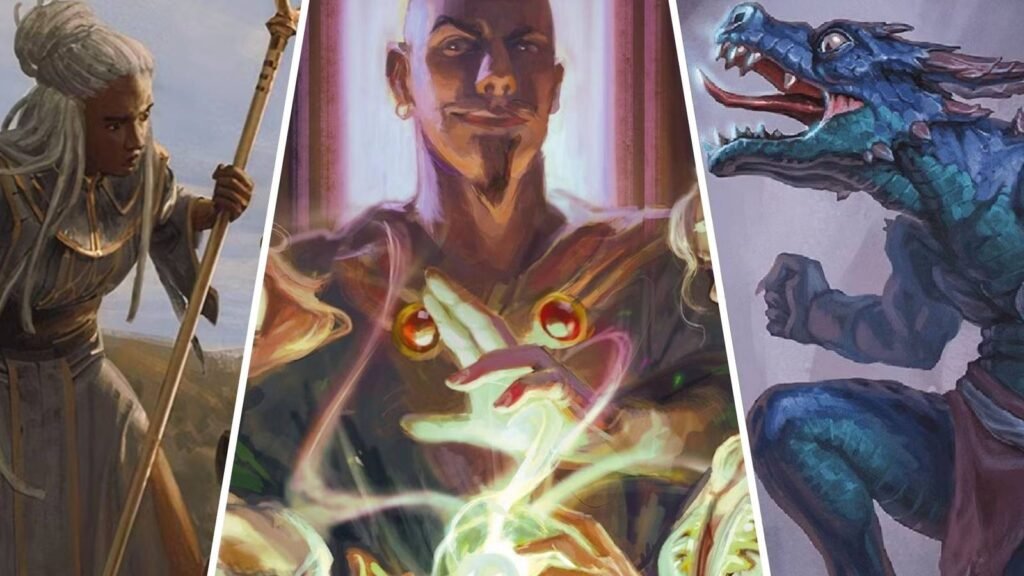
Seeing your creation coming to life is an amazing feeling, isn’t it? Now that the backstory is done and the Dungeons & Dragons campaign has finally started, you get to use the fantastic character you came up with and have a great time with your friends as you travel through the landscapes of whatever setting you’re playing in.

However, when one player’s energy isn’t the best on the table, it can actually bring the whole experience down, making the sessions boring for the group or even creating a problem among them. And sometimes, the person bringing everyone down could even be you.
You Take The Lead On Every Decision
Don’t Cut Them Off

It goes without saying that, if your group is totally okay with you taking the lead, then all is well. However, even if they are, that doesn’t mean you need to lead on every single decision.
That is even a bigger problem if you barely listen to what they have to say before deciding on what you’ll tell NPCs or do in a certain scenario. Get their input, even if it’s through out-of-character conversation.
You Intrude In Other Characters’ Moments
Let The PC And Their Dad Talk

What’s worse than taking the lead in most scenarios? Taking the lead in story moments that are clearly meant for another player. If you’re in an epic moment between the rogue and their nemesis, let the rogue decide what to do.

Related
That’s Awkward: 10 Types Of Dungeons & Dragons Players You Definitely Don’t Want At Your Table
Sometimes, as a DND Dungeon Master, you get a group of players that aren’t so fun to play with. Here are some of the worst players to have.
Sure, help during combat, and even intrude if that’s what the rogue’s player wants you to do, but let them take center stage and follow their cues if the moment revolves around them. You’ll have your moments, too – and if you don’t, talk to your DM, because you should.
You Tell Other Characters What To Do
Even If No One Asked For Suggestions

Whether it’s in or out of character, making decisions on behalf of other players is bad, as we already covered. With that in mind, it’s even worse if not only are you making decisions for them in the narrative, but even in their combat actions, too.
It’s okay to suggest ideas if a player feels lost and unsure of what to do, but imposing these ideas is bad. You only control one character, so the other player has the final say on anything related to their character, including what they’ll do in their turn.
You Downplay How The Others Roleplay
“Stop Being So Dramatic”

Players can have very different styles. Some of these styles can clash, sure, and that is a distinct problem in itself, but ideally, the whole party needs to be okay with how each player wants to roleplay their character.
Thus, undermining their moments with mockery can take the fun away from other players. And we get it; you’re likely joking just for the fun of it, and not because you want to undermine your friends. Still, even unintentionally, you could be doing that.
You Cause In-Group Fighting
Good For Drama, But Bad For The Game

A group of protagonists who don’t get along is common in movies and series, even single-player games, because of the excellent drama material it offers. However, in D&D, you actually have to deal with said drama, which might be a problem.
Some players do enjoy roleplaying in-group conflict, so if you and your friends are having fun with the idea, more power to you. Still, talk to them beforehand if they’re okay with it or cut this behavior off, because some players can take it personally.
You Put Your Backstory Into Focus Too Often
Again, Not Everything Is About You

This one might be a mistake on the DM rather than you, but it can also come from your behavior. We know you’re excited about your amazing backstory, and you want to resolve the problems you wrote there, but you’re not the only protagonist.
Sometimes, the game won’t focus on you. There might even be entire quests with multiple sessions where it won’t focus on you. Bringing up how you’re in a hurry to fix your problems or ditch things to focus on you won’t help anyone. Think like this: The other players are just as excited about their content as you are about yours.
You Disrupt Other People’s Moments
“That Reminded Me Of A Joke I Heard Once…”

Sometimes, when you don’t have input in a certain situation, like our rogue dealing with their enemy, you might lose focus a bit. That’s fair; it happens. Still, even if you’re a bit distracted, it doesn’t mean you should distract others, too.

Related
Best Character Concepts That You Should Never Play In Dungeons & Dragons
These D&D characters work in theory but often cause issues in reality.
Important moments that involve other players aren’t the best time for you to break the mood with a joke and ruin the atmosphere, for instance. If you’re not invested in what’s going on, the least you can do is wait for the next part.
You Interrupt To Correct Things
From Rules To Lore

Now, this one might annoy your DM more than the other players, but in a way, it also disrupts the moment and ruins the atmosphere, similarly to the one above. Correcting things in the moment isn’t usually the best.
There are exceptions, of course; if a friend is making a bad decision based on an incorrect retelling of previous events, then by all means, stop them. But sometimes, things are different because your DM wants to do things differently; they can change the rules and the lore, you know?
- Original Release Date
-
1974
- Player Count
-
2+
- Age Recommendation
-
12+ (though younger can play and enjoy)
- Length per Game
-
From 60 minutes to hours on end.
- Franchise Name
-
Dungeons & Dragons
- Publishing Co
-
Wizards of the Coast