A balanced party is overrated. Dungeons & Dragons can offer many exciting challenges in your way, but you can also use it to have some weirdly unorthodox ideas with your friends and make parties that just break all mechanical balance. Whether it’s because you’re too strong, and the DM doesn’t know how to properly challenge you, or because the party is too weak, it makes every fight an interesting challenge.
Thus, let’s throw away the classic fighter, wizard, rogue, and cleric party, and create some party compositions that will require some extra thinking when it comes to handling conflict, whether this extra thinking comes from the party or the DM.
All-Cleric Party
The Holy Party

Clerics are one of the few classes in the game that can fill any role. You can easily make them powerful healers, tanks, or DPSs by simply choosing an appropriate subclass for each of them.
Thus, a whole party of clerics, where the only difference is their subclasses, can actually work surprisingly well. It’s also a perfect opportunity for the DM to use fiends as enemies, or even make corrupt religious organizations, or whatever fits the theme.
All-Druid Party
All Natural

We won’t focus much on parties with only one class, as that’ll get repetitive, but druids are also worth mentioning. Druids work in a similar vein as clerics due to their ability to fill any main role in the party.
Plus, this one also offers interesting themes, such as using elementals and having nature go wild, or focusing on enemies that are heavily industrialized as a foil. Both ideas also have the party lacking some minor roles, such as party faces, which the DM can use to their advantage and balance things a bit.
Only Martials
Spells Are For The Weak

Spells are some of the most powerful abilities in the game, so why not make everything harder by throwing them away completely? A party with only fighters, barbarians, rogues, or monks can offer a great challenge. Oh, and no half-casters, so no paladins, rangers, or artificers.
For this idea, you can’t pick subclasses with spellcasting, so no Eldritch Knights or Arcane Tricksters, but if everyone is on board, you can even ban subclasses that tackle too much into the fantastical, like Psi Warriors, Soulknives, World Trees, or Elements. It’s just the ultimate humans (yes, humans, for the complete ‘normal guy’ experience) against all the fantastical monsters and magic the DM throws in their way.
There’s also the added challenge of not having anyone capable of healing, thus relying on healing kits and potions.
Only Spellcasters
The Glass Cannons

You can go the other way and only pick characters who are dedicated spellcasters, like wizards, sorcerers, bards, clerics, and druids — we’ll leave it to you guys to decide whether warlocks and half-casters fit.
The low levels might be a nightmare, but once you all become powerful enough, you’ll be able to destroy everyone before they have a chance to hurt you (probably). Plus, clerics and druids can actually work in the frontline, so there will be a line of defense here.
No Tanks
The Real Glass Cannons

If you really want the added challenge in your party composition, then let’s remove clerics and druids entirely. That said, it’s okay to add a few martials, like monks or rogues.
Still, the idea is to make a group that is highly dedicated to being a DPS, or even support, but no one is tasked with being a heavy frontline character. Thus, it’s important to be a bit more strategic when starting a fight, or your characters may end up being a bit expendable during your missions, while still being strong enough to get things done.
No Healing Spells
If You Die, Walk It Off

Why not make a more properly balanced group, with martials and spellcasters, but the only thing missing is healing spells? You don’t even need to ban clerics or druids, just the spells themselves.
You can even have the added challenge of banning resurrection spells, so the idea is to rely on items or to kill everyone before one of the player characters dies. Plus, because the group can still be more properly balanced, a party that is heavily focused on damage can still work well here. Tanks may die, though.
Only Stealthy Characters
We Work In The Dark To Serve The Light

Rogues and monks come back here, as well as dexterity-based martials like fighters or rangers (though unorthodox barbarians and paladins could work), or even some casters, as they can be focused on illusions or enchantments.
The idea here is to build a whole party that can handle an encounter by eliminating targets through assassination rather than an actual fight, or even avoid fights by passing through unnoticed. It’s a whole different way to play the game, perfect for heist scenarios or just for unique ways to handle conflict.
Everyone Has The Same Key Role
All Charisma, For Instance

Technically, the entry above is on the same idea, but you can also tackle this in other ways. Basically, the whole group is good at one thing. Each character can and will be good at other things, too, but their core mechanic is shared.
Things such as everyone is a good party face, or everyone is tanky, etc., can make for some funny adventures. The group can work together by dealing with the problem in a unique way (such as talking their way out of a problem), while simultaneously, everyone will have the same weakness that the DM can exploit. This might get repetitive after a while, but it’s fun for a one-shot or short campaign.
Everyone Flies
A DM’s Nightmare

Okay, now let’s tackle a few ideas your DM may hate and ban, though they can also work for shorter stories or if your DM is up to the challenge. The first one is a party where everyone has a species with innate flight, so they can go anywhere whenever.
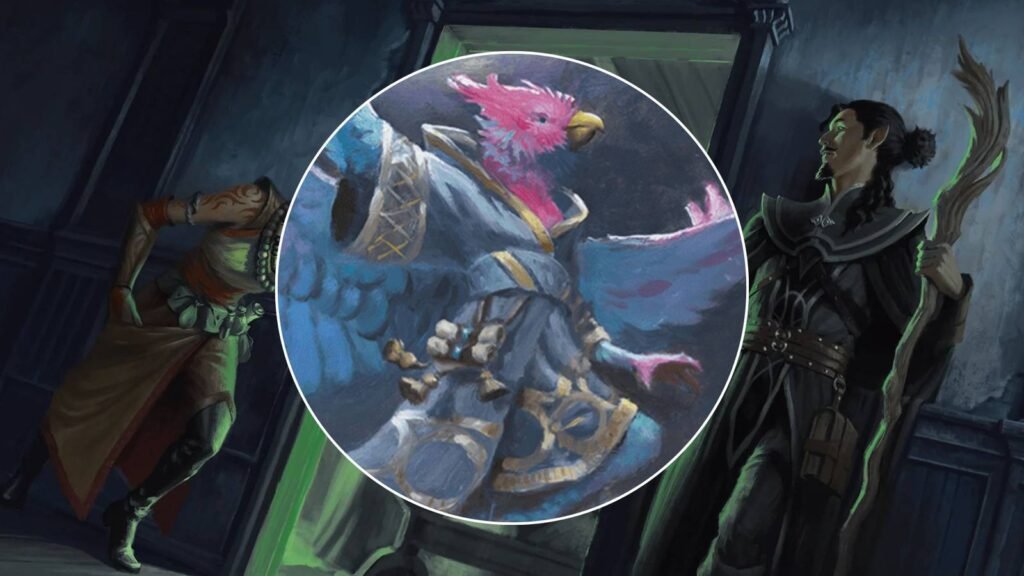
Aarakocras, owlins, fairies, or winged tieflings can be used here for these shenanigans, and you can make interesting character concepts, such as ranged characters or strong characters who can grapple and toss people. Thus, it’s just a matter of time until the DM makes a bunch of flying enemies, giving you epic moments of air combat, Dragon Ball style. Or they’ll give all minions bows and Trip Attack.
All Summoners
Gotta Summon Them All

Another nightmare to offer your DM is to make a bunch of summoners in the party. The 2024 rules even adjusted those a bit, so it’s not going to drag as much, but it can be a nightmare in 2014 due to how many characters can be in the turn order.
Still, this is another fun idea for shorter stories, as the novelty will end eventually, but having a whole party that relies on summoned creatures to fight can offer interesting dynamics for the game.
- Original Release Date
-
1974
- Player Count
-
2+
- Length per Game
-
From 60 minutes to hours on end.
- Age Recommendation
-
12+ (though younger can play and enjoy)
- Franchise Name
-
Dungeons & Dragons
- Publishing Co
-
Wizards of the Coast