
JRPG plots are often melodramatic, sometimes absurd soap operas, filled to the brim with twists and drama. You either love ’em or you try to ignore ’em while you grind levels in cutesy, bright-colored combat. So how is it that , a set in an alternate reality World War 2, manages to recognize and address head-on the horrors of the Holocaust better than pretty much any Western war game? The simple answer is they chose to address it at all.
Valkyria Chronicles gives you command of a militia squad in the fictional Eastern European country of Gallia in 1935. Gallia is a small neutral country in the middle of two larger powers at war, before the evil East Europan Imperial Alliance invades and forces them headfirst into the conflict. You’re basically Switzerland, if in an alternate timeline the Nazis invaded and dragged them into the war. Over the course of the game you go from defending small towns in your homeland to leading full assaults on the enemy forces.
There are of course differences, large and small, throughout this alternate universe. In the real world, World War 2 wasn’t fought with magic weapons and glowing blue gem-fuel. The map of Europa itself is slightly different too, but still recognizable enough—though as the plot moves forward, you learn the Atlantic Federation to the west aren’t the de facto good guys you initially assume them to be. It’s all dramatized and exaggerated in a distinctly Japanese way, but ultimately rooted in reality.

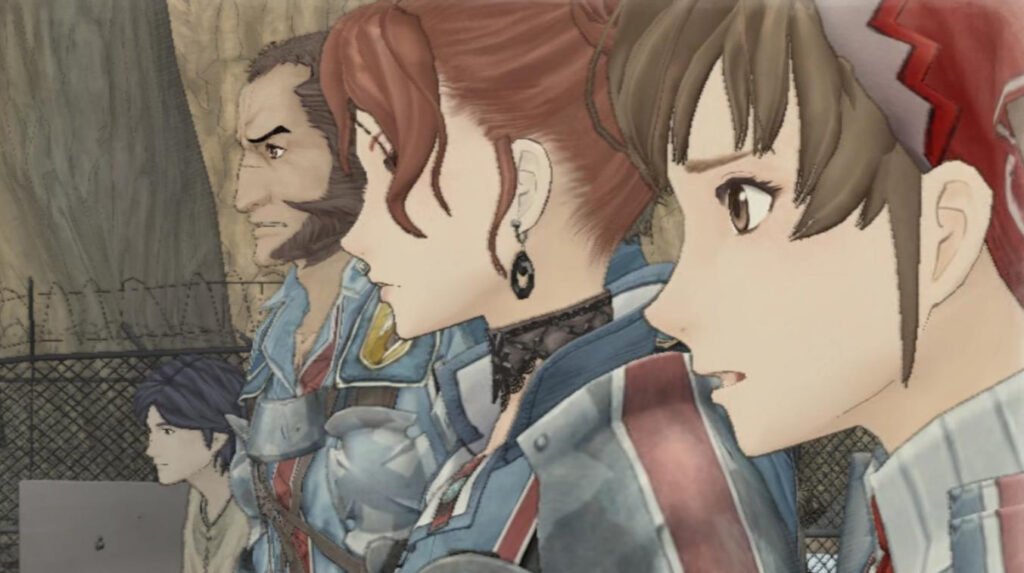
Given Valkyria’s fantastical elements, Sega could’ve easily ignored the more serious aspects of the real-world conflict it’s based on. Instead, it addresses many of them directly. The Darcsens, as they’re called in Valkyria Chronicles, are a dark-haired race intended to represent the Jewish people. They’re irrationally hated not just by the bad guys, but by many of your own squadmates too. The main character’s adopted sister Isara is a Darcsen, but also a skilled tank pilot and absolutely vital to the team. Meanwhile another main character named Rosie hates Darcsens, and the conflict between the two is a key plot point throughout the game.
Hatred of Darcsens is rooted in the game’s lore as an age-old prejudice, not just a generic trait used to identify enemies. Likewise, Darcsens aren’t only depicted as an oppressed people in the background—you are continually introduced to new Darcsen characters who have active roles both in and out of combat. Racism and xenophobia aren’t ignored, and they aren’t just used as set dressing. They’re right in your face and have real impacts on both the plot and the actual stats of your characters.

Certain squadmates can have the “Darcsen Hater” trait that makes them less effective when near a friendly Darcsen, while others can have “Darcsen Bond” for the opposite effect. Using racism as a game mechanic could easily end up feeling crass or forced, but it’s a natural fit with the other squad synergy effects in Valkyria Chronicles. It serves to tie the story directly into the gameplay, and Rosie even gains a new ability as her opinion of Darcsens shifts over the course of the plot. You can’t ignore this part of the game, just as you can’t ignore the Holocaust when talking about WW2.
Except Western developers have shown time and time again that you can. None of the games have addressed these issues in even a fraction of the way Valkyria Chronicles has. A series that built its success on WW2 games (and is ) hasn’t dared to take a hard look at what that war was really about. And frankly I’d be nervous if they did, given every time the series pauses the over-the-top action for drama, it usually ends up as a big joke. ‘Press F to Pay Respects’ was an embarrassing example of this, and I shudder to think about the quick time events we might see in a historically accurate WW2 setting.

In this regard, an alternate reality JRPG is the perfect vehicle to let Valkyria Chronicles talk about these things. By putting you in the shoes of a fictional third party and shifting the game into a hypothetical fantasy world where the Nazi’s fanatical search for lost magic relics actually bore fruit, Sega gives itself some breathing room to tackle serious issues rather than shoehorn them in. The worry of getting details exactly right or touching on events that are too heavy for a game isn’t entirely gone, but it is lessened.
There’s a mission toward the middle of Valkyria Chronicles where you have to storm and liberate a Darcsen labor camp. While you manage to destroy your military target, the imperial forces light a building full of Darcsen’s ablaze before you can rescue them. But that’s not the end of it; your squad then sifts through the ashes and have real (if melodramatic) conversations about what it all means and how we as people should respond to hatred like this. I dare any western developer to get that real about genocide, even if they have to introduce fantasy elements to do it.
is arguably the only big-budget game to do so, with a mission of its own about infiltrating a Nazi-run labor camp, and it succeeds for similar reasons to Valkyria Chronicles. It tells the truth through an alternate fantasy (you’re a supersoldier who destroys giant, canine mechs and meets Jimi Hendrix), but that sensationalized fiction doesn’t interfere with the authenticity of the horror you’re subjected to at Camp Belica, where BJ is processed, admitted to the camp, can speak with different prisoners, and is forced to wade through the misery and death of the setting. Wolfenstein’s willingness to expose you to these details is part of the reason it’s remembered for both .
I understand why most developers don’t make the effort to depict the Holocaust in a deep or serious way. Representing such a tragedy with sensitivity, accuracy, and in a way that respects survivors is a daunting task. Even Wolfenstein and Valkyria Chronicles veer away from depicting actual extermination camps, for instance. As businesses, many studios are focused on mitigating risk, and it’s hard to think of something more damaging to a developer’s reputation than a clumsy depiction of genocide.
But staying quiet about the dark parts of history also has its consequences. When war games go out of their way to omit serious topics like genocide, it advances an idea that games should only aspire to be sanitized, ‘history toys’ that shouldn’t challenge us emotionally. We have an obligation to talk about this part of history, uncomfortable as it may be and no matter the medium, to ensure were learn from the tragedies of the past.
Valkyria Chronicles, against the odds of its anime cuteness, shows that games based on WW2 don’t have to make a choice between being fun and being somber. Valkyria is often whimsical—your squad mascot is a pig with wings—in addition to being a tactically deep RPG, but it still treats something as difficult as genocide with the seriousness it deserves.
For its part, Sega, a Japanese company, is guilty of not exploring Japan’s involvement in WW2 throughout Valkyria Chronicles. Still, the game manages to depict aspects of the European theatre better than most Western developers before them or since. Even if they had to do so through a melodramatic fantasy JRPG, they are talking about hard things with genuine grace and care, and not letting players ignore the costs of the war.

