

Last updated on October 30, 2025

Loran of the Third Path | Illustration by Steven Belledin
Entering the world of card collecting can be both thrilling and bewildering, especially for newcomers in hopes of adding value and preserving cards worth hundreds, if not thousands of dollars.
If you find yourself navigating the maze of choices and are still uncertain about where to begin, fear not. In the quest to find the best grading company, I’ve gathered insights on various singularities for each service to aid in your decision-making process. Below, you’ll discover key details about some of the prominent players in the field, shedding light on aspects such as pricing, turnaround time, items graded daily, and the unique features they offer.
Without further ado, let’s dive right in.
What Are Card Grading Services?

Mishra’s Research Desk | Illustration by Matt Stewart
Card grading services are companies that evaluate and assign grades to collectible trading cards, like sports or gaming cards, based on factors such as corners, edges, surface, and centering.
Customers send cards to the grading service individually or in bulk, depending on their value. Then, the grading company realizes a process of authentication to ultimately return the cards to their owner in protective cases that include details of the card, such as the grade, card information, and the grading company’s logo, to preserve the card and enhance its market value.
This process offers collectors a standardized and objective measure of a card’s condition. Authentication ensures the card’s legitimacy, while grading criteria assess wear, creases, and scratches, typically using a scale of 1-10, with 10 indicating mint or near-mint condition.
In addition to cards, grading services are used for many other products and objects, such as autographs, event tickets, photographs, and even Funkos!
#16. Degree Grading

Degree Grading is here to compete, accepts a wide range of types of cards and takes steps to make your submission process easy. The regular grading rates are $25 per card, or as low as $15 if you send in 10 or more cards. Collectors like their low cost and striking black and green slabs.
#15. Diamond Service Grading

The turnaround time of 10 business days on standard grading that includes subgrades is a good feature for the California-based Diamond Service Grading. At $15 per card or as little as $12 per card for 100 or more cards, you can get cards protected with a QR code for its report, and a UV-resistant plastic case to make it easy to display. Unlike some grading services, you do not declare the value of your card, so if you want a change of pace, this offers a lot.
#14. Premier Card Grading

The name recognition may not be there with Premier Card Grading, but if you’re looking for something a little different or like subgrades and a metal label, this could be your service. They turn cards around at express pricing in 7-10 business days for about $50 per card, and otherwise charge about $20 per card. The bulk pricing starts at 30 cards and costs as little as $15. The subgrades are included right at the top of the label, and despite their popularity with Flesh and Blood, do accept Magic: The Gathering.
#13. ISA Grading

While there are many card grading services that focus on sports or TCG cards, ISA International Sports Card Authentication has rather good service for all kinds of cards, despite their name. Pricing is very competitive, especially for TCGs like Pokémon, Magic: The Gathering, Yu-Gi-Oh!, Disney Lorcana, and Dragon Ball, which is $12 per card for their 10-day service tier. To give the exact grade for premium cards, ISA uses grades from 1-10 in half-point increments.
#12. Three for One Trading

If you are looking for a grading service that excels at details and quality control, then look no further, as Three for One Trading is here to help. Cards go through several departments—Buying, Card Listing, and Sales—before getting graded, which helps reduce errors and ensures each card is carefully evaluated. That said, if a mistake does happen, they’re quick to make it right, showing their commitment to customer satisfaction. Their grading system follows European standards, with categories like Near Mint (NM), Excellent (EX), Good (GD), Lightly Played (LP), Played (PL), and Poor (PO), so collectors can easily understand a card’s condition from nearly perfect to heavily used. They also provide detailed descriptions in product listings, calling out special features like artist signatures or alterations, which adds extra value for buyers.
#11. MTG Grade

With a flat €12 per card, MTG Grade offers one of the most transparent and affordable card grading services in Europe as they also offer additional discounts based on the number of cards you submit.
Cards that score between 1-9.5 get a silver/metal blue label, while perfect 10s receive a special gold/ruby label, and speaking about slabs, they offer a unique “Slab Swap” service for only €7, if you have an old MTG Grade slab model from 2018-2021.
Their turnaround times are fairly quick: Standard grading takes 1-2 weeks, and express service returns cards in 1-3 days. If you’re in the Lille area, you can even get same-day grading for an additional fee.
#10. CCC Grading

If I were looking for an ultra-thin but durable slab for my cards, I would choose CCC Grading. Their slabs are ultrasonically welded to be waterproof and tamper-proof, and their high-definition cameras ensure the card’s condition and authenticity are precisely assessed by evaluating key areas such as corners, edges, surface, and centering.
Unlike others that offer a flat fee, CCC Grading pricing is based on the card’s value. Between €1-50, their pricing starts at €15 per card, with an optional GradeReport (An easy-to-understand grading report exclusive to CCC Grading).
For higher-value cards, the fees go up to €18 per card, depending on the value, with extra features like GradeReport and online images. Premium cards over €500 cost €26 per card, and the service includes GradeReport and additional online images. They also offer options like HD Scans and Monochromatic Labels for a small fee. Plus, you can add insurance at 2% of the declared value to keep your cards safe.
Standard service takes a reasonable time, but you can speed things up with Express (7-10 business days for an extra €5 per card), Super-Express (1-3 business days for €20 per card), or Ultra-Express (same-day grading for €40 per card).
#9. TAG Grading

While many card services just care about receiving your cards, regardless of how you actually get those cards to them, TAG Grading is one step ahead by providing clients with “Submission Kits” used to mail the cards for grading to ensure they arrive safely.
Once they receive the card, they use a super-precise 1000-point grading system that evaluates corners, edges, surfaces, and centering. The end result provides you with a Digital Image and Grading report (DIG) that gives you a detailed breakdown of each graded card that you can view by scanning a QR code on the slab or by entering the certification number online. The report includes a high-resolution image of each card’s details, such as features, defects, and more.
Their pricing is flexible and competitive, starting at $20 per card for value grading with a 30-day turnaround, and they even offer bulk discounts for larger submissions. If you need faster results, Walkthrough grading costs $300 per card with a 1-2 day turnaround, and a full DIG report.
#8. Arena Club Grading

While there are mixed reviews about Arena Club Grading, some aspects stand out about them. The primary one is their dual role as both a card grading company and a market where collectors can showcase their cards in what they refer to as “The Vault.”
Arena Club Grading “keeps” your graded cards safe and stored, allowing you to digitally showcase them. The cards are under 24/7 surveillance, and transactions are recorded for security and transparency.
The base price starts at $10 for a card graded and stored in the vault (i.e., they keep the cards). The alternative option is priced at $15 for traditional grading with a turnaround of 10 business days for orders under 200 cards. Additionally, you have the option to send your already graded cards from other grading services to be minted and vaulted within 10 days for as low as $5 per card. These cards can be returned to you at a cost of $1 plus shipping.
While this may sound appealing on paper, collectors claim to experience longer turnaround times than advertised, and the shipping cost can be somewhat expensive when returning your cards. In the meantime, your cards are showcased on Arena Club’s marketplace.
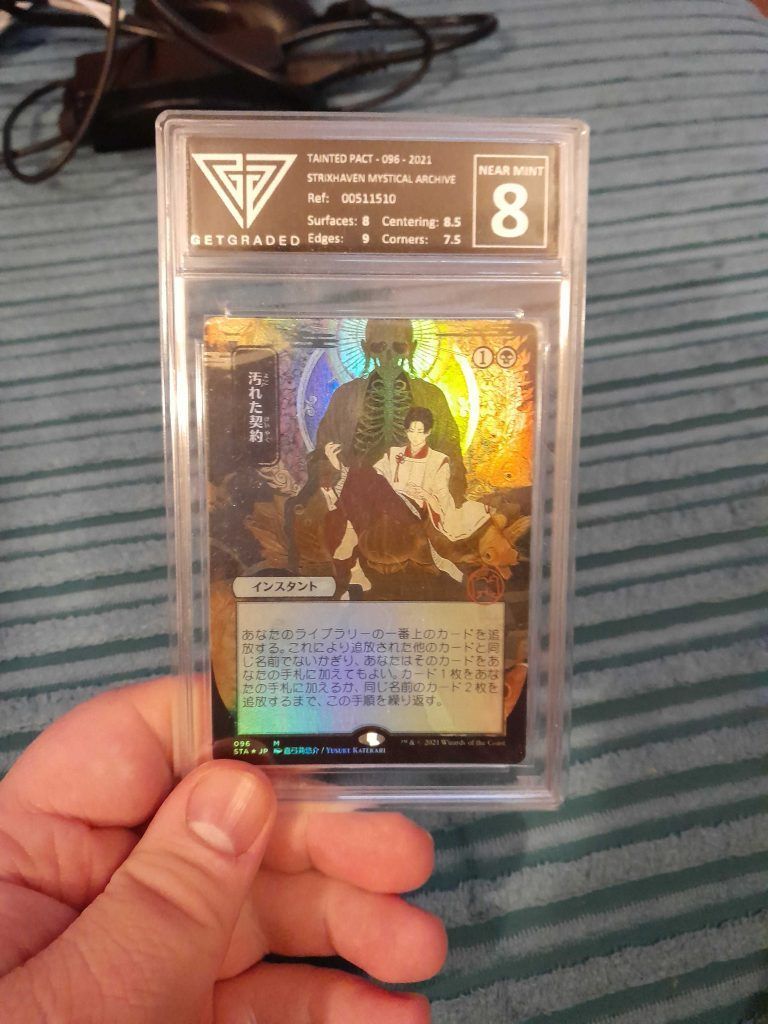
#7. Get Graded

Most of the grading companies on this list are based in the United States, so I wanted to highlight a few from the UK, with Get Graded being one that has garnered the most attention, albeit with limited reviews or information available.
It’s plausible to assume that the dominance of the major top three brands on this list contributes to the relative scarcity of reviews for Get Graded. Nonetheless, their prices are notably competitive, starting at £11 per card with a turnaround time of 15-20 business days. They also offer an express service priced at up to £20, promising a delivery time of 2-5 business days.
Apart from the location, there isn’t much deviation from the other companies on the list, as Get Graded employs a grading scale starting at A (Authentic-Poor) and reaching up to 10 (Flawless, a tier below Pristine).
#6. KSA Certification

KSA grading company engages in the assessment of a variety of items, including sports cards, TCGs, autographs, and coins, accommodating multiple languages in the process.
Their base price starts at $30 for 1-19 items and decreases to as low as $15 for orders exceeding 100 cards. The average turnaround times for regular and bulk services range from 20-40 business days.
For those seeking quicker results, walkthrough services are available for $150 per card, with a turnaround time of the same day. The express service is $100 per card with a turnaround time of one business day.
While their prices may appear higher compared to others on this list, it’s important to note that it’s a flat fee, independent of the card’s value; the cost remains constant.
However, one aspect that may be less favorable is the separation between the card and the package, which seems somewhat larger than other services on the list. This design could potentially result in cards hitting the borders during transit, posing a theoretical risk of damage to the cards.
As far as grading goes, they go from 1 (Poor) to 10 (Gem Mint).
#5. Rare Edition

Here is a card grading company that utilizes various technologies to assess a wide range of sport and TCG cards. What sets Rare Edition apart is the size of the envelope in which the cards are graded—it’s notably large, resembling an iPhone case, according to some.
When you choose to grade cards with them, each card comes with the following features:
- Crystal Clear Polycarbonate surrounding the card
- Corning Gorilla Trademark Glass
- QR code and NFC Chip providing the full and subgrade report for each card
- UV Protection
While they strive to innovate and create a distinct product not currently available in the market, the most noteworthy aspect of this new approach is its limited replicability. Unlike other grading companies that have experienced attempts at forgery, this model appears to be challenging to imitate.
However, given their incorporation of newer features and technologies, there is an impact on prices. Their lower-tier option starts at around $39 per card with a turnaround time of 20 business days, going up to $89 with a 3-day turnaround. The positive aspect is that each of these options includes subgrades and grading reports, somewhat justifying the higher price when compared to other companies in the market.
#4. Certified Guaranty Company (CGC)

CGC is one of the many card grading companies in the market that’s been around for a while, providing collectors with an option to assign a value to their cards and safeguard them from potential damage. The fees start as low as $14 per card when submitted in bulk, with a minimum of 25 cards and a turnaround time of approximately 65 working days.
Beyond that, fees can vary based on the cards’ values, reaching up to $275 for grading the most expensive ones, with a quick turnaround of only two days. Their grading scale ranges from 1 (poor) to 10 (pristine or 10+), with the latter representing cards that are flawless under 10-times magnification.
Previously, CGC was a strong contender in the card grading market. However, I must acknowledge that around mid-2023, a set of changes rendered it less reliable. The most impactful change was their decision to alter their grading standards, resulting in inconsistencies, saturation, and averaging scores, issues compared to their previous grading system.
For instance, a CGC Pristine Card may not be as “perfect” as a PSA top grading scale, leading to a significant difference in market value between the two grading companies despite the card being marked with the highest grade.
#3. Sportscard Guarantee Corporation (SGC)

Sportscard Guarantee Corporation (SGC) is a card grading service that’s mostly focused on sports cards, especially vintage ones.
Like PSA, SGC’s prices vary depending on the declared value of the product, starting at $15 for products valued at less than $1,500, to $3,750 if the value is above $100,000. However, for each additional $10,000 over $100,000 in card value, $375 is added to the base fee.
What I love about them is that they have a neat app where you can submit and track orders as they go through the grading process. In terms of turnaround time, SGC comes out on top of some other competitors, usually ranging from 15-20 business days to deliver the final grading.
#2. Professional Sports Authenticator (PSA)

Professional Sports Authenticator (PSA) is widely considered the most popular card grading service, offering a diverse range of options that cover everything from cards to autographs, accommodating a variety of items for grading. They provide multiple packages, with fees ranging from $19-$600 depending on the assessed value of the card.
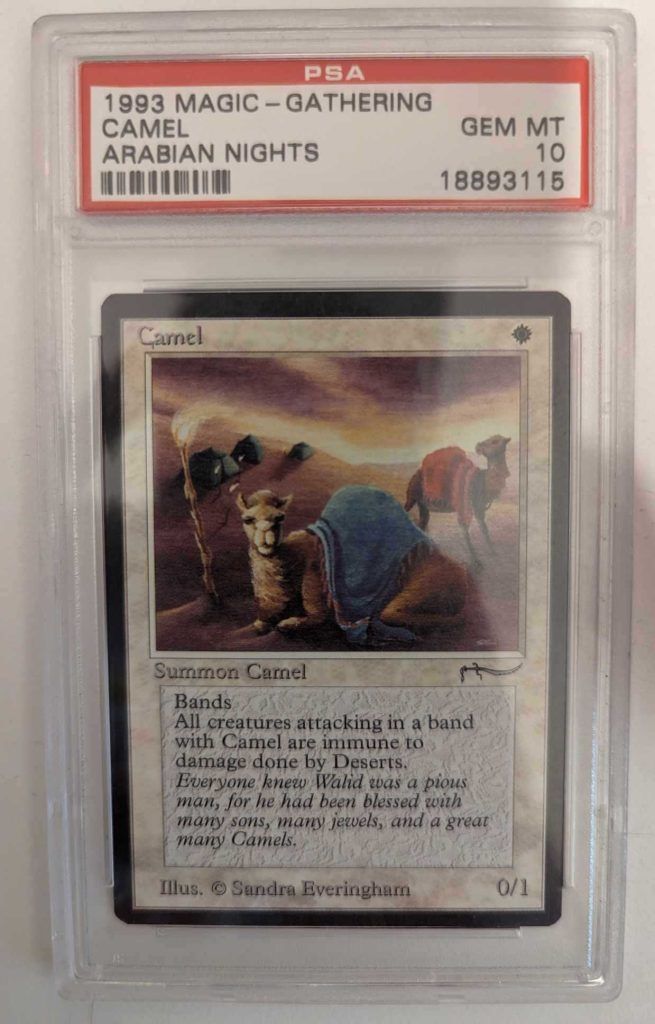
The process is straightforward: Initially, they authenticate the card to verify its legitimacy. Once the card successfully passes the authentication test, it proceeds to the grading phase, which involves assigning a numerical grade on a scale from 1-10. Subsequently, the card is securely encapsulated in a sonically sealed, tamper-evident case. The label on the case prominently displays the card’s grade and certification number.
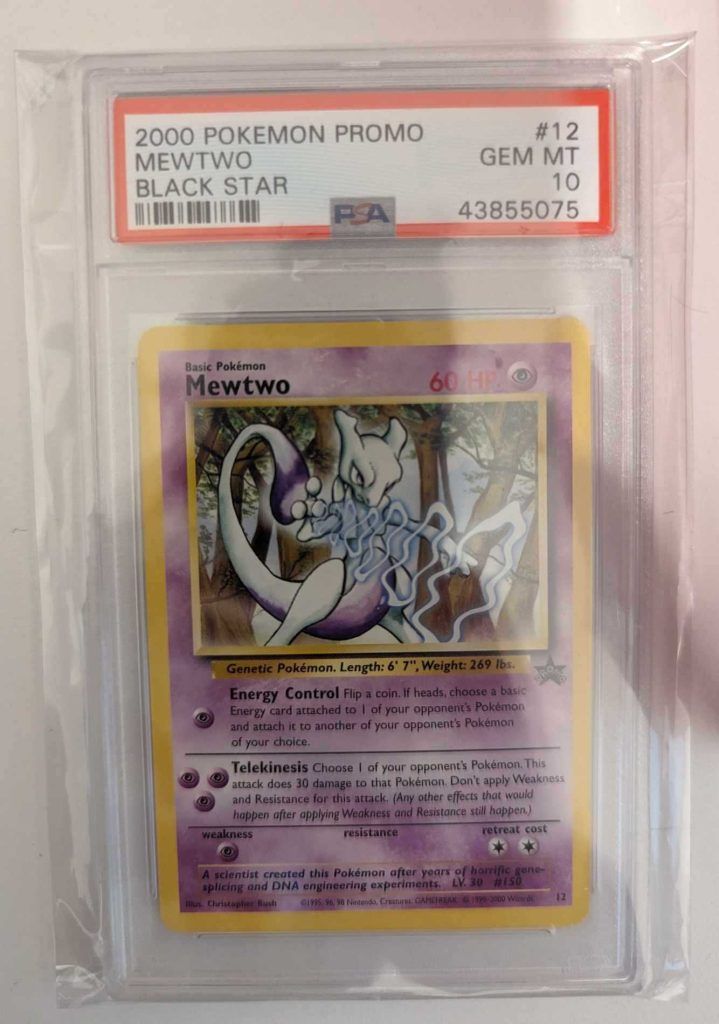
This whole process can last around 65 business days; however, for the pricier option at $300 per card, the turnaround time dramatically decreases to five business days.
While PSA is primarily known for grading sports cards, it also extends its services to various other types of collectible cards, including trading cards from different categories, such as gaming cards (e.g., Pokémon, Magic: The Gathering), non-sports cards, and even autographed cards.
Last but not least, PSA offers something that not many other card-grading services provide: the Card Grading Guarantee. While it may seem a bit complex, there’s a comprehensive disclaimer explaining it. Essentially, this guarantee means that PSA will purchase your graded card at market value if it was inaccurately graded. This might not appear significant at first glance, but it is actually noteworthy. If they happen to grade a card at a lower value, they commit to rectifying the situation by ensuring you receive the correct and fair compensation for it.
#1. Beckett Grading Services (BGS)

Beckett Grading Services (BGS) is a grading service that specializes in the field of sports collectibles. They also evaluate cards for the most popular TCG brands and non-sports cards. What’s outstanding about them is that instead of providing an overall grade, they offer subgrades for cards. This involves assigning individual grades to different aspects of the card, such as corners, edges, surfaces, and centering, providing collectors with a more detailed breakdown of the card’s condition. They also offer average grading for cards, which is usually cheaper than the ones with subgrades. However, I personally would always love to see the details of the cards, especially since the difference isn’t that high, usually at $3 more per card.
This last detail is significant because the process is more meticulous due to the evaluation of many details. Getting a 10 with BGS is slightly better than getting a 10 with PSA, for example, and this is reflected in the price when looking to buy cards with the same rating but from different grading services. A black label BGS 10 tag means that it’s a pristine card with no issues on any of its subgrades, while a regular one, despite having a 10, may have slight imperfections around some parts of the card. Another interesting thing about them is that their prices range from $15-125 and the only difference between them is the turnaround time, and that’s 2-3 business days at the fastest.
Is It Worth Getting a Card Graded?
Yes, getting a card graded is worth it if your card is rare, valuable, or in excellent condition. Grading can significantly increase its market value by verifying its authenticity and condition. For high-end collectors and investors, a high grade (such as a 9 or 10 from PSA, BGS, or CGC) can ensure and improve the card’s price. However, for lower-value cards, the cost of grading might outweigh the potential profit, and because of that, I would go with one of the cheaper services if all I want is to get my card into a slab, regardless of how much it costs.
Who knows, maybe you just want to have your favorite version of a card in a perfect 10 condition because it was one that helped you win a big event or you just simply have a deep emotional connection with it.
Wrap Up

Nissa’s Encouragement | Illustration by Tommy Arnold
Choosing your grading company can be challenging if you’re new to the hobby, as there are many options to consider outside of the ones I’ve shown.
Still, the ones I’ve showcased today are the most popular, thanks to their pristine work.
If you still have doubts about where to choose from, below, I have compiled a list of singularities across the top three grading companies that can hopefully make your decision easier.
| Grading Company | Cheapest Price | Turn Around Time @Lowest Cost (Business Days) | Offers Subgrade | Max Grading | Items Graded Daily (gemrate.com) |
|---|---|---|---|---|---|
| SGC | $12 | 15-20 | No | 10+ | 1.9k |
| PSA | $28 ($19 for club members) | 45-65 | No | 10 | 93.6k |
| BGS | $15 (no Subgrades) | 45+ | Yes | 10+ | 1.5k |
Overall, the most popular one is definitely PSA, as it has a wider variety of item types they can grade. However, if you would love to go the extra mile and be as detailed as you can in terms of a card’s condition, BGS is where you would like to be. And you may want to check other places where you can get your cards graded, like your LGS, conventions, or in-person grading services.
What do you think? Do you know of another grading company that’s to your liking? Let us know in the comments. As always, writing useful topics for you is a pleasure; if you want to see more, remember to follow us on Twitter/X to never miss an article.
Take care, and we will meet each other next time!
Note: this post contains affiliate links. If you use these links to make a purchase, you’ll help Draftsim continue to provide awesome free articles and apps.
Follow Draftsim for awesome articles and set updates: