“I’ve never had a problem telling a genre story in a system as generic as D&D“, ex creative director Chris Perkins tells Wargamer in a recent interview. “I’m very skeptical of anybody who says D&D is or isn’t anything, and that the system can’t lend itself well to different genres.”
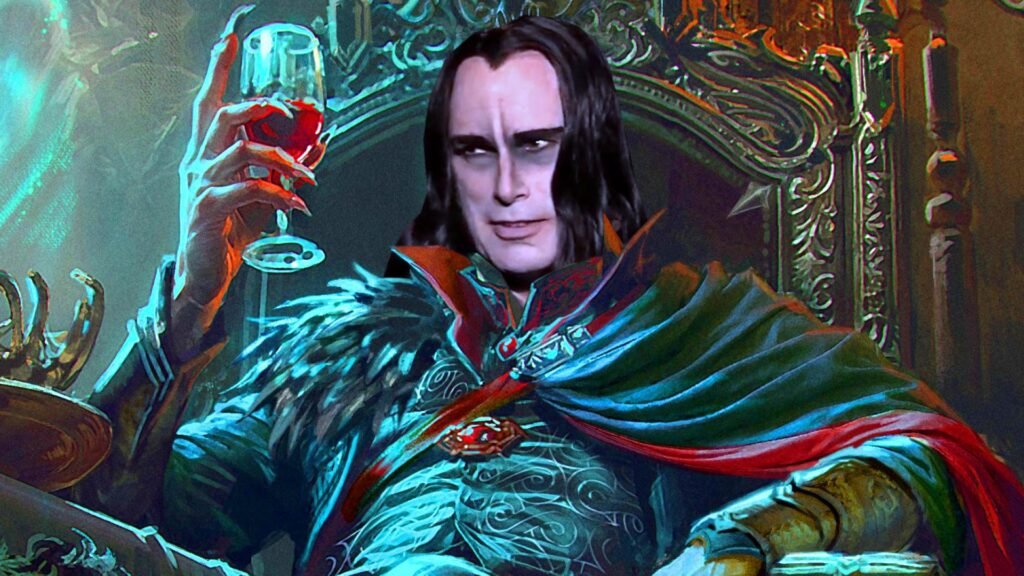
The comments stem from a discussion of Curse of Strahd, the hit horror campaign that just celebrated its 10th anniversary. The module is one of fifth edition’s runaway successes, despite its genre being such a departure from usual D&D games.
Since inception, D&D has focused on telling heroic fantasy stories. Characters begin play with exceptional gifts, and they gradually level up to the point of superhuman ability. The mechanics predominantly focus on exploration and combat, and, traditionally, experience is gained through violence and the acquisition of wealth.
Later editions have destabilized these core truths somewhat, mainly by divorcing XP from loot and kills. However, the broad structure remains, and many have argued that this makes D&D ill-equipped to tell stories in different genres.
Take horror, for example. To create a sense of dread, you need to take away the audience’s power. The scariest scenarios are those you do not understand, and those where you cannot fight back. Such lack of agency should be anathema to D&D, whose system constantly empowers you to take heroic action.
Despite this, modules like Curse of Strahd succeed. Perkins, D&D’s former creative director, thinks it’s because the system is more versatile than some give it credit for.
“D&D has proven for decades that it’s very elastic”, he tells Wargamer. “When you look at the system long and hard, even as written, it’s super flexible.”
Perkins says this flexibility comes from how easy it is to tinker with. “D&D encourages people to modify it, so you can pretty much do anything you want to the system”, he says, “including bend it into a genre”. “Simply by stapling on some subsystem or little mechanism, you can change the entire feel of the game.”
The example Perkins offers is Curse of Strahd’s Tarokka deck. This is a tarot-style deck of cards that you draw from to determine the location of key items in your campaign. It also decides which NPCs are most crucial to your plans. Shuffling the cards means that each adventure feels slightly different.
“Once you start using the Tarokka deck as a prop, that alone changes the landscape of what you’re playing”, Perkins says. “It feels like you’re playing a different game.”
“The art is so evocative, and the mechanism of the cards is not something D&D uses widely”, he adds. “The fact D&D allows you to bring these cards in and randomize the story with them shows how versatile the game is.”
For more of Perkins’ thoughts on Curse of Strahd, check out why he thinks Strahd is D&D’s most successful villain. Or, if you have your own opinions on the design insights above, we’d love to hear your takes in the Wargamer Discord.