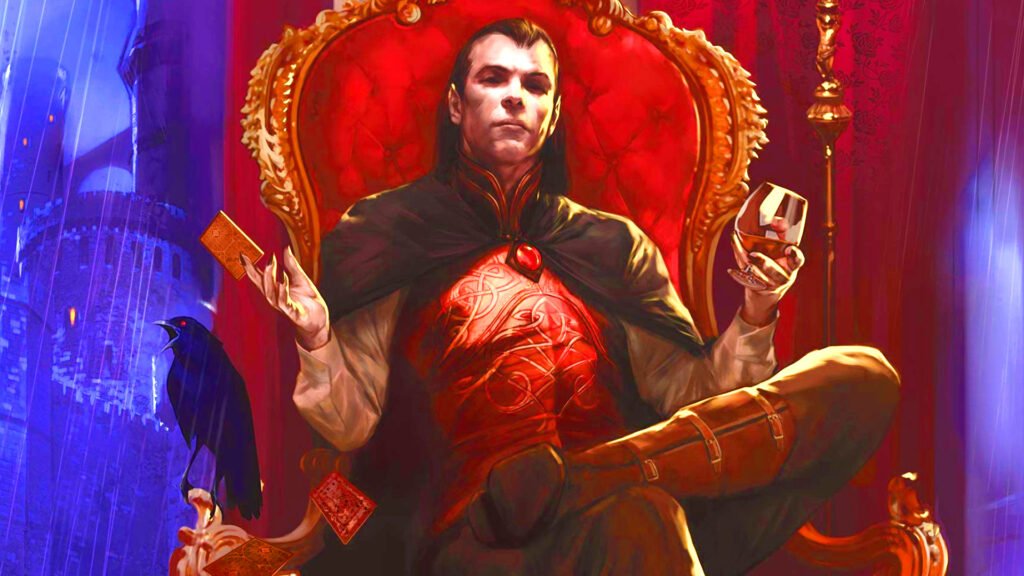
D&D‘s seminal 2016 adventure, Curse of Strahd celebrated its 10th birthday this month. A lot can change in 10 years, and former D&D creative director Chris Perkins says as much when we meet to discuss the campaign he led design on. “I’m a very different person today than I was 10 years ago”, he tells me.
I ask Perkins, if he had his chance to return to Barovia, what would he change about Curse of Strahd? The answer is not content, but content warnings.
“One of the things I might do differently now is be a bit more transparent about some of the subtextual themes that run through the adventure”, he tells me. “For instance, this may not be obvious from a casual view, but if you played the adventure, you know there’s this whole subtext about addiction and how people cope with tragedy.”
“There are a lot of people in Barovia who are just drunk”, Perkins adds. “How does a DM handle that?” “I’d want to surface it more and not bury it in the subtext.”
“I’d make sure that, if you’re going to bring this up in your game, you make sure everybody at the table is cool with it, because even though it’s subtextual, some people are going to pick up on it and might not actually like it.” “I’d add a few more rails and guideposts for the DM to make sure they don’t fall into any traps or stir up something that’s not going to be appreciated by the players”, he explains.
This is something that Curse of Strahd DMs have been doing themselves for years. Before I began my Strahd game almost three years ago, I warned my new players to expect murder, torture, mind control, body horror, and every possible trigger in between. And, yes, alcoholism was on the list.
Perkins’ proposed changes reflect an increasingly popular aspect of tabletop RPGs: safety tools. These have been around for more than a decade (the famous X-Card, for example, was invented in 2013), but in recent years, they’ve become an increasingly common method of keeping players safe and comfortable during roleplay.
Perkins makes it clear that current “player sensibilities” would be at the heart of any changes to the module. He adds that part of fifth edition’s wider success was, in his mind, because “it was the first edition of the game that was seriously built on the bones of feedback”.
“Curse of Strahd is easily the most-played fifth edition adventure.” “I’d want to get some survey data to figure out what people do and don’t like, then figure out if there’s another way to do those things.”
What would you change about Curse of Strahd, 10 years on? Let us know your takes in the Wargamer Discord. Or, if you just want to chat about your favorite DnD classes, we’re down for that too.