Eberron: Forge of the Artificer is a new Dungeons & Dragons sourcebook that doesn’t so much revive the campaign setting, but spruce it up and update the content for the latest iteration of the 5E rules, along with smoothing out some of the setting’s limitations.
Eberron is one of the more unusual Dungeons & Dragons settings, with a steampunk tone and advanced tech merged with magic, such as trains and airships powered by sorcery.
While never reaching the heights of popularity as the Forgotten Realms (especially after the release of Baldur’s Gate 3), Eberron maintains its own fandom that loves its different take on the standard Dungeons & Dragons world.
Eberron: Forge of the Artificer Transforms a D&D Class

Eberron: Forge of the Artificerisn’t meant to be a standalone book for people who want all the info on the campaign setting. It’s more like a companion piece to a 2019 book called Eberron: Rising from the Last War, which offered more in-depth explanations of the setting, its history, and its lore.
This book is more of a rules update, primarily on character options. The DM section of the book is aimed more at crafting adventures based on specific aspects of the setting, fleshing out airship rules, and offering new options for Bastion strongholds.
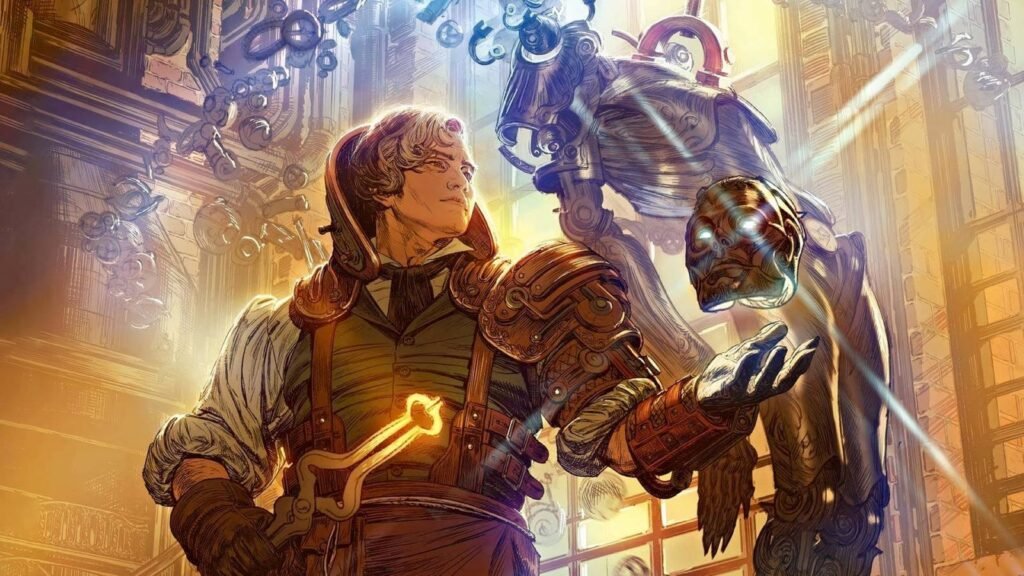
Its first addition to Eberron: Forge of the Artificer is an updated version of the Artificer, one of the few Dungeons & Dragons base classes to exist outside of the Player’s Handbook.
The Artificer is someone who merges magic and machinery, lacking the full spell repertoire of a Wizard, but making up for it with a wide variety of special abilities, and has a more diverse pool of spells to choose from. The main change that the Artificer has gone through involves magic items, which are now a core part of the class’ identity.
One major change is that The Artificer has switched the Infuse Item power with Replicate Magic Item, allowing them to create powerful gear with a little preparation. These items can be broken down at later levels for different advantages, such as recharging spell slots.
Replicate Magic Item is a fantastic ability, becoming the new cornerstone of the Artificer. As the Artificer levels up, they gain access to more “plans”, increasing their available selection of items.
While the Artificer might not be as good a healer as the Cleric or as potent a buffer as the Bard, they can have a vital role in shaping the power level of the party, especially if they’re generous with what they give to their allies.
If anything, Replicate Magic Item might be a bit too useful, and DMs will want to see what’s available to the Artificer before allowing it in their game. Giving players immediate access to things like a Wand of Secrets or Sending Stones could potentially derail the DM’s idea for their adventure, with Replicate Magic Item becoming even more annoying in this regard later on.
There’s also a brand-new Artificer subclass, called the Cartographer, who uses magical maps to find their way through the world. The Cartographer has some extraordinary abilities, especially for an exploration-themed campaign, though it’s hard not to think of it as misplaced, as it feels like more of a fit for the Ranger than the Artificer.
The Artificer update is the highlight of Eberron: Forge of the Artificer, providing a much-needed update to one of the most unique classes in the game, bringing it in line with the changes made in the 2024 Player’s Handbook.
Eberron: Forge of the Artificer Species & Dragonmarks Have Changed

A key part of the Eberron setting is Dragonmarks, mystical symbols that can appear at birth and grant magical abilities to those who master them. Eberron: Forge of the Artificer has changed how it works to align with the Backgrounds of the updated ruleset. Now, players can get a Dragonmark as a replacement for an Origin Feat at level 1.
One of the biggest and best changes to Dragonmarks concerns their availability. The previous iterations of Eberron tied the Dragonmarks to specific races, such as House Jorasco and its mark being restricted to halflings.
While the lore of the setting does tie many Dragonmarks to specific houses/races, the rules aren’t set in stone, so players have way more freedom to select the ones they want.
Like the school Feats from Strixhaven, many of the Dragonmark Feats provide a character with a small library of spells that the character can use, making them a significant asset to caster characters. Players are heavily incentivized to take them through their sheer usefulness, making them an excellent resource for introducing people to the setting.
Eberron: Forge of the Artificer has updated versions of several races: Changeling, Kalashtar, Shifter, and Warforged. The Changeling and Shifter had previously received updates in Mordenkainen Presents: Monsters of the Multiverse.
The Warforged are almost identical, with no additional text to explain why healing magic works on it (like the Autognome from Spelljammer received), because Cure Wounds now affects any creature the caster touches, with no limitation on Constructs.
The Kalashtar, a notoriously powerful species from the previous books, has been made even better, as they have Advantage on Charisma Saving Throws, the rules for Mind Link have been tidied up, and they can now choose a Skill Proficiency after completing a Long Rest.
Disappointingly, the Changeling and the Shifter are almost unchanged, with the Changing receiving Advantage on Charisma checks while shifted, and that’s it. This would have been the perfect chance to introduce new versions of these species that are distinct from the ones in Mordenkainen Presents: Monsters of the Multiverse, and it’s a shame their updates are so similar to their most recent iterations.
A new/old addition to Eberron: Forge of the Artificer is the Khoravar, which is the latest iteration of the Half-Elf. Both the Half-Elf and Half-Orc were removed from the new Player’s Handbook, and the Khoravar marks their return.
In terms of stats, the Khoravar is stronger than the base Half-Elf, having access to a free Cantrip from the Cleric/Druid/Wizard list, and can automatically pass a saving throw against the Unconscious trait once per long rest, making it marginally better than its predecessor, though not by much.
Eberron Isn’t Great for New D&D Players

As previously mentioned, Eberron: Forge of the Artificer doesn’t fully flesh out the setting. Indeed, the book repeatedly suggests players read Rising from the Last War for more details on specific points. This is a significant mark against the book for new readers, as it doesn’t offer the in-depth look at the world and its history that one would expect from a full sourcebook.
The adventure/campaign elements are broken down into several chapters: Sharn Inquisitives, about detectives and crime-solving; Dragonmark Intrigue, about gangsters and disputes among the upper class; and Morgrave Expeditions, about exploration and tomb raiding.
The Dragonmarked Intrigue chapter introduces Renown rules for Eberron, offering tangible benefits to those who side with specific factions. These rules were initially laid out in the new Dungeon Master’s Guide.
Dragonmarked Intrigue gives them an arguably better home, considering how the political machinations of the Dragonmarked are hard to ignore, and taking sides is something that people eventually have to do in Eberron.
Morgrave Expeditions brings back the Group Patron rules from Tasha’s Cauldron of Everything, with Morgrave University acting as a base for the players, with staff who can provide them with quests. This is one of the best sections in Eberron: Forge of the Artificer, especially as its content could easily be reworked into a different campaign setting with minimal work on the part of the DM.
These three campaign chapters only offer barebones outlines for the Houses and factions of Eberron, and while there are some new stat blocks available, there isn’t a ton of fresh content for DMs who want to plop something onto the table.
The lack of content from Eberron: Rising from the Last War hits hardest here, cementing this book’s status as something that’s more for returning people who are already fans, rather than being an introduction to the setting.
Eberron Now Has Expanded Airship Rules

While nothing is stopping a regular Dungeons & Dragons campaign from including airships (especially for people who own the Spelljammer books), they’d wholly be the invention of the DM. It’s not particularly difficult to explain their existence in a magic world: just say that some wind elementals or genies have enchanted the ship to fly.
More than any other Dungeons & Dragons setting, airships are a core part of the Eberron experience. Hence, it makes sense that they’d receive comprehensive rules updates in Eberron: Forge of the Artificer.
The airship rules feel like an expanded version of the Spelljammer ship rules, which were notoriously light and underbaked in 5E. Eberron: Forge of the Artificer does a great job of making the ships and combat feel distinct, with tangible reasons to upgrade.
It’s not just the airships that are different, as there are new rules for movable Bastions. In the new Dungeon Master’s Guide, there are rules for player strongholds, called Bastions, which act as a base between missions, with upgradeable elements.
Eberron: Forge of the Artificer introduced rules allowing Bastions to move with the player, serving as mobile bases during their adventures. Obviously, these are expensive to buy/maintain, and having a stronghold with legs will dramatically change how campaigns will work.
If the players can hire an army of mercenaries and staff that are always to hand, then they have ready-made solutions to a lot of the issues that a DM might throw at them.
A moving Bastion isn’t unheard of, as Turn of Fortune’s Wheel featured a similar concept, but that campaign was designed with it in mind, as was most Spelljammer content. A moving base could present issues, but at least the DM has the options to use them, and the rules here are tied to the Renown content introduced in the book, baking them into the setting quite well.
The main issue with Eberron: Forge of the Artificer is that it’s more of an update for existing content than a whole book. Anyone who wants to create an Eberron campaign needs the previous book to get the full context for the world.
There are a lot of good rules and mechanical updates, a lot of which can be transplanted to other settings, so there is stuff of use here, especially for players, but it’s only half a purchase for the whole Eberron experience.

- Franchise
-
Dungeons & Dragons
- Original Release Date
-
January 26, 1974
- Publisher
-
Wizards of the Coast, TSR Inc.
- Designer
-
E. Gary Gygax, Dave Arneson
- Offers a ton of updated rules for iconic Eberron content that brings it in line with the higher power level and more balanced current iteration of Dungeons & Dragons.
- Dragonmarks improvements and a wider selection pool make them more attractive, both in and out of Eberron.
- Airship & Bastion updates are transplantable to other settings, making them easy for DMs to use to expand their campaigns in new and fun ways.
- Requires information from another book to fully understand the setting.
- The returning species are too similar to their previous iterations.