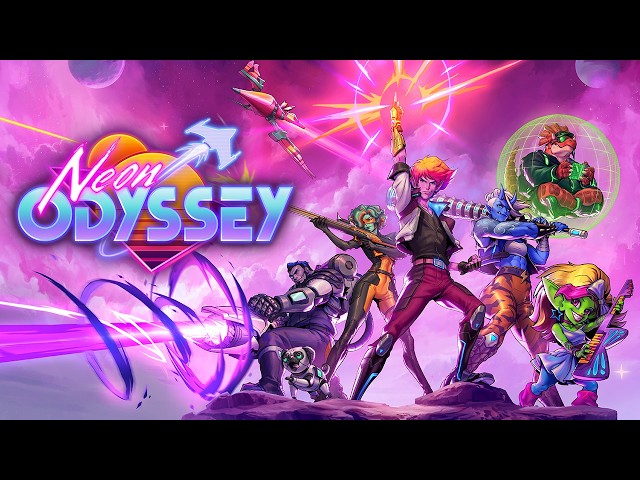
Neon Odyssey is the magnum hope-us of D&D actual play troupe Legends of Avantris. The TTRPG book trilogy reimagines Dungeons and Dragons as a nostalgic, optimistic synthwave space opera, with reskinned DnD classes sharing hyperspace with all-new species and mechanics. And, yes, there will be new ship combat mechanics.
Avantris Entertainment has dropped plenty of hints about Neon Odyssey ahead of the Kickstarter campaign launch in May. But, with over 40 subclasses, more than 30 species, and hundreds of pages to cover, there’s always more to learn. I caught up with Mikey Gilder – who, when he’s not voicing demonic clowns, is Avantris’ chief creative officer – to learn more.
Wargamer: Avantris’ previous RPG setting, The Crooked Moon, was very interested in exploring the tropes of its genre (folk horror). Will Neon Odyssey do something similar?
We’re diving into space opera, and it’s a full pivot from folk horror in The Crooked Moon. Folk horror is relatively narrow, but space opera is quite the opposite. It’s as broad as a whole galaxy!
When it comes to Avantris Entertainment, what we feel we do well is taking a genre, turning that shit up to 11, and making it appropriate for tabletop gaming in a way that brings your heroic fantasy to life.

Influences range from Thundercats to Final Fantasy to Fullmetal Alchemist to Mad Max. The one that interests me most is how important music is to the setting. Tell me more!
Music is universal, something everyone can have a touchstone to. It also does a great job establishing a feeling and setting the tone.
The setting itself is called Stardust Rhapsody. The currency is called Galactic Notes. Harmony and Cacophony are our spirit world. Plus, we think the Grand Cosmic Melody, our song of creation, is a badass space opera thing that hasn’t really been done in a sci-fi setting before. Everyone at Avantris loves music, and we’re excited to bring our love of music to the book.
The big question everyone asks when a new space setting comes to D&D is ‘will it have better ship combat than Spelljammer’?
I hope so! I believe our lead designer Dan Dillon, formerly of Wizards of the Coast, is a genius. He’s really spearheaded our space combat and starship combat, translating the super-cinematic dogfighting you’ve seen in Star Wars.
If you want to scramble your starships and be Rogue Squadron or Star Fox, you can do that. Or, if you want to jump in a combat freighter like the Millennium Falcon or the Serenity, you can do that as well. Or, if you want to get behind the controls of your own mech, you can. I think Dan’s done a tremendous job translating cinematic space combat into tabletop in a way I don’t think has been done before.
And the cool thing is you can play it right now. If you become a VIP and back the campaign for one dollar, you get immediate access to a nearly 50-page playtest document. We had a meeting literally yesterday about learning from people playtesting this for a month, and we’re already making some considerable changes.

Are you able to share any of the lessons you’ve learned so far from playtesting?
The biggest change is figuring out the scale and numbers to translate to D&D. A transport like the Millennium Falcon is one hex big, but when you have hexes that are 1500 feet rather than five feet, that’s a big difference. We’ve been figuring out the scale of numbers like AC, modifiers, and proficiency bonus, seeing how these change the math.
Based on the feedback, we know people are very comfortable having a clean break between regular scale and starship combat scale. We’re not going to make you sit down and play another game. It’s still D&D, but it’s not at player scale, and that gives a ton more freedom in adjusting the math and making it as easy as possible to switch to.
What are the challenges of reflavoring the core D&D classes for a unique scifi setting?
The challenge is striking the balance of how much to change. The core mechanics are not changing drastically; we’re making simple mechanical tweaks to fit the setting. Sometimes we’ll adjust things we wish were different in base 5.5e, but for the most part, it’s all about making things feel like part of a space opera.
Our version of the Wizard, for example, is the Grid Runner. They’re all technomancers who manipulate the hypergrid, a digital realm that affects the whole galaxy. It allows them to warp reality through digital programming.

All Espers, which is our version of the Sorcerer, are psionics. We have mechanical tweaks where Espers are able to use their spells without verbal and somatic components, because they’re using their minds to cast spells. They can also choose Intelligence instead of Charisma as their spellcasting ability.
Things like that shouldn’t be too complicated, but the little tweaks should make people feel like they’re inhabiting the setting in a way that feels space opera instead of medieval.
What’s unique about the Machinist? How does it differ from your common garden Artificer?
A lot of third-party publishers have made their own version of the Artificer, as it’s only the 12 core classes we can use with the SRD. Our version is the Machinist. We wanted to make sure it was still a magic-using class, so we’ve kept it as a half-caster, but we wanted to make sure it felt distinct – it’s not a cheeky, numbers-filed-off version of the Artificer.
If the Grid Runner Wizard is our software class, this is our hardware class. You can specialize in armory and making cool weapons, or you can specialize in robots and have an empowered little buddy. Or you can specialize in hyper tech, which is our version magic, and be a more powerful spellcaster because of your strange, magical inventions.
It’s even more customizable thanks to all the schematics you can learn as you level up. You build gadgets with unique upgrades, and these mean no two Machinists are going to feel the same. We hope people feel like they have a ton of freedom. The idea is you’re a flexible jack-of-all-trades that always has just the tool for the job.

Tell me more about how you make the book’s many, many species stand out.
One of the biggest investments we’ve made is in every single species. We’ve done a tremendous visual development process for this, similar to videogames. We’re making the investment because we want to make sure every species feels distinct, deserves to exist, and has a core identity.
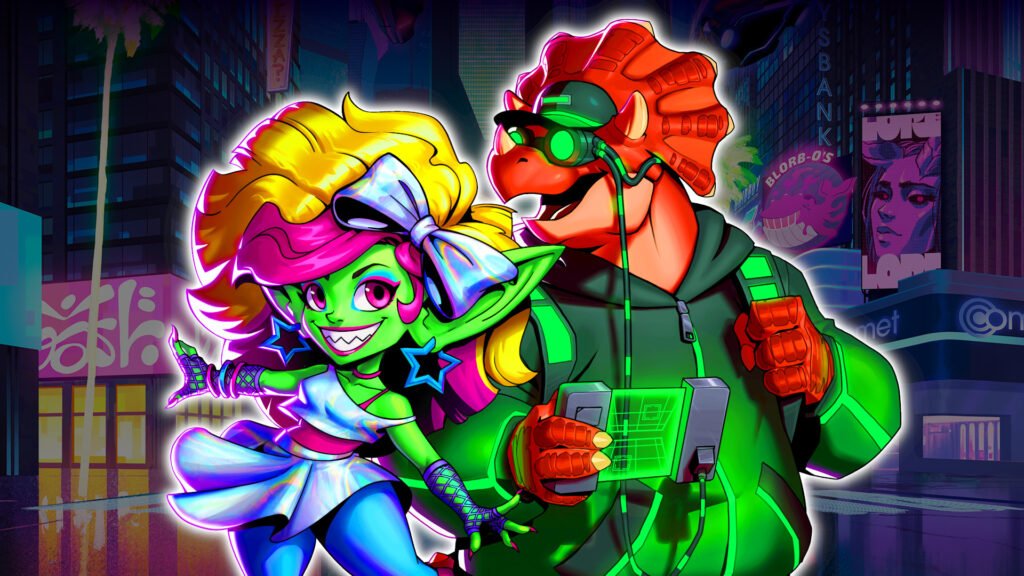
We have our analog of Elves and Dwarves and Goblins, and we’ve done things to make them feel familiar but space’d up. Our Elves are the Solari, who have a tether to the sun, while our version of the Dwarves have a connection to ether and gravity and space itself. Our goblins have neon skin, and they radiate neon light and affect people’s emotions.
We also have more weird and alien options. We just revealed a species that’s our take on the one-eyed, subterranean Morlock from The Time Machine. If you want to be the weird little alien guy, we have something for you.
We’re making these species for 5.5e, but we aren’t sticking to the same background rules. We’re using The Crooked Moon’s approach, which is just choosing a +1 and a +2 in two stats, or +1 in three, when you select a species. It’s basic freedom that gives you more flexibility. We don’t want you to do mental gymnastics in order to hit a theme. We want the mechanics to blend with the narrative and art.

I’ve seen references to several new rules systems, like bounty hunting and space racing. Can you tell me more about the unique rules Neon Odyssey will introduce?
We wanted to make sure we provide a tremendous number of tools for GMs to build the space opera that they want. That means including quintessential things like hacking and racing. And with racing, we basically had to invent a new economy.
We can’t have gold, silver, and electrum, or prices that reflect a baseline medieval fantasy world. We want a space opera where you have down-on-your-luck, Cowboy Bebop heroes who are always out of money. That means debt is now a concept in our system. The setting has a lot to spend money on – starships are expensive, and living is expensive!
We’re also inventing a profession system so that archetypes like the ace pilot fantasy are not tied to any particular class or subclass. This is a feat track that allows you to specialize as you advance or be a jack-of-all-trades at first-level.
We’re giving you options to build the space opera protagonist of your choice, but if there are too many choices for new players, that can be overwhelming, so the goal is that lots of these tools are optional and can be applied how you want.

Tell me more about why Avantris decided it was important to avoid generative AI when creating Neon Odyssey.
If we ever use generative AI, put me in the dirt, because I’ve been taken over by a pod person. It shouldn’t need to be said, because it’s just anathema to the spirit of the hobby and what we do at Avantris. It’s just generic, horrid slop with no soul. We’re doing this because we want to put beautiful things into the world that resonate with people.
But it needs to be stated, because if you look at all the products coming out on Kickstarter, I’ve been pretty shocked at the number of projects in the tabletop crowdfunding space – that are doing pretty decently – that are just entirely AI. I believe the nostalgia, the emotions, the hope, the optimism, the brightness, and the music of Neon Odyssey is an extremely human experience, and that’s why it needs to be said, too, that we don’t use AI.
We value our creatives, and we take our art extremely seriously. We’ve made massive investments into it, and I think it’s worth every penny, because that’s how people connect.
It sounds like, for all its whimsy, Neon Odyssey is pretty necessary, considering how abysmal the world can be right now.
Neon Odyssey is an anthem of optimism, positivity, human connection, and infinite horizons. It’s nostalgic, and it’s romantic. There’s an inherent melancholy to nostalgia, but I think it’s a beautiful melancholy.
Even though it’s an out-there scifi, what we’re trying to achieve is very grounded and human. We’re making this because – and I’ll speak for myself right now – we need the spiritual fuel now more than ever. We’re hoping Neon Odyssey will be a large injection of spiritual fuel where people can celebrate things they love and the joy they feel. That’s one of the tentpoles of the ethos of the campaign.
Want to talk more about your favorite D&D actual plays? Join the conversation in the Wargamer Discord.