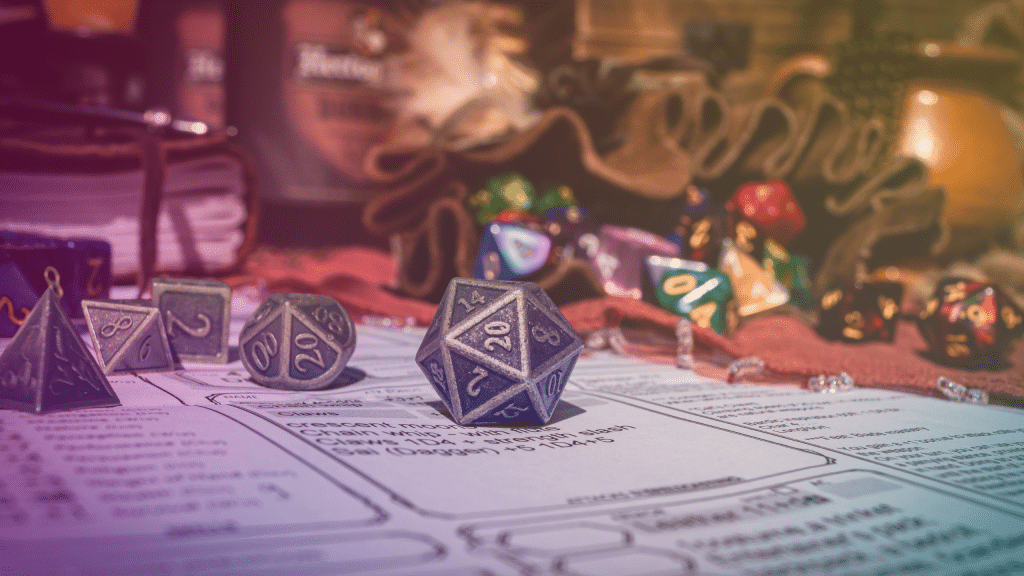
After Chris Sutton signed up as a volunteer at Kaleidoscope Youth Center in Columbus in 2017, he pitched a program where LGBTQ+ youth who used the center’s services could play the tabletop roleplaying game Dungeons & Dragons.
He thought the game could help them practice math through adding and subtracting results from rolling dice and develop problem-solving and social skills – all while exercising their creativity through improvised storytelling.
The center wasn’t sure at first how to implement the program, Sutton said. But once they started to figure it out, the staff got more enthusiastic — and so did the youth.
“The staff were like, ‘Hey, the youth are clamoring for it,’” Sutton recalled. “‘They want it.’”
Tabletop games provide an LGBTQ+ third space
LGBTQ+ people have historically had trouble finding third spaces – cheap or free spaces to interact outside of a bar setting. Tabletop roleplaying games can be a way to create that queer space and help break the ice, said Adam Crawford, president of LGBTQ+ tabletop gaming nonprofit Pride Gamers of Columbus.
Historically, he said, people who played roleplaying games had nerdy interests and could feel like outcasts. As LGBTQ+ people feel othered, it creates a kind of “connection between the groups.”

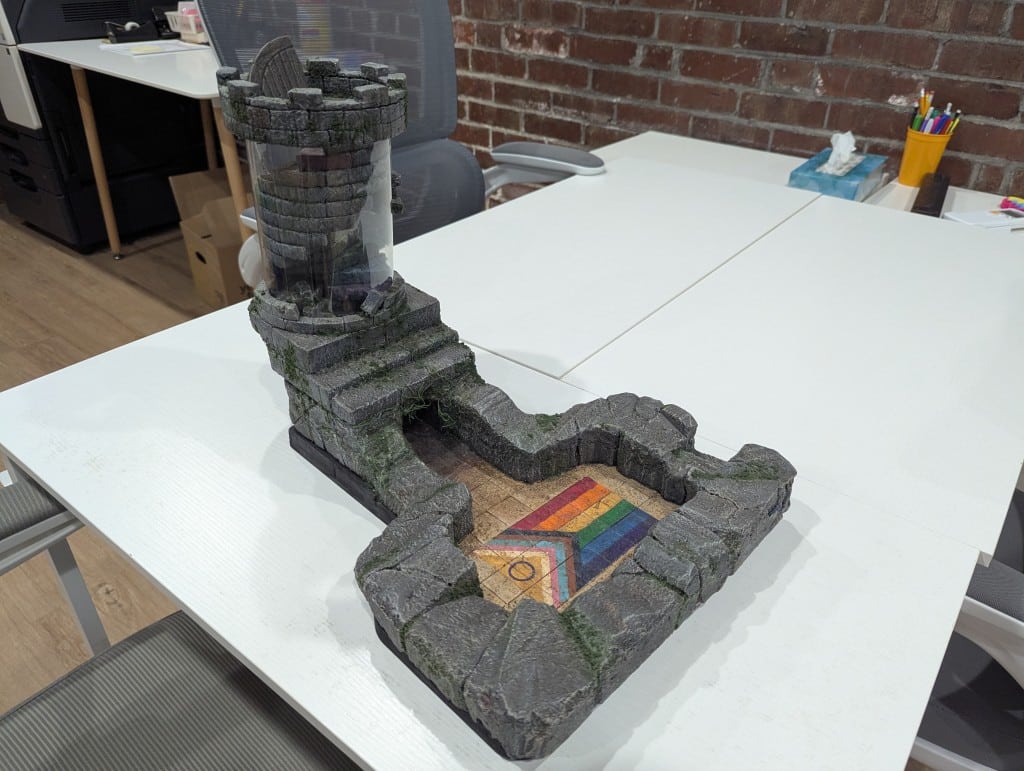
Pride Gamers hosts “Storytelling Saturdays” at venues like Westerville library for tabletop roleplaying games, in addition to their other casual board game mixers. They have helped raise money for KYC to buy a gaming table topper, a table with cup and card holders and a gaming mat.
The topper came in handy for KYC. The games are run by a volunteer — the Dungeon Master (DM) — who basically crafts the overarching narrative and setting for a party of typically four to five players who inhabit their own characters. Together, players and the DM have a conversation from which collaborative, improvised storytelling blooms.
Telling queer stories
Tabletop roleplaying games’ unique form of storytelling allows queer stories to be told, while most media lags behind, Crawford said. Players’ characters can be queer, too, and they can be a way for players to explore an LGBTQ+ identity without feeling embarrassed or like an outcast.
“To be able to see representation of [your identity] and then see yourself [or] your experiences reflected in the game can be really heartwarming and self-actualizing, even though it’s in this fantasy space,” he said.
Roleplaying provides an opportunity to create queer stories, Crawford said. And those queer stories can take on a variety of genres and subgenres, like horror fantasy or space opera — especially as roleplaying games have moved beyond just D&D. “The power is in your hands,” he said. “You can tell whatever story you want.”
One of those storytellers is Kyros Erwood, a 17-year-old player who just started college this year. He started going to Kaleidoscope Youth Center when he was 12. He played for two months before the COVID-19 pandemic hit the United States. Once KYC reopened, he picked up the hobby again in 2021.
He joined a campaign as Kepli, a male halfling rogue. Kepli was short for a halfling, who is basically the size of a hobbit from J.R.R. Tolkien’s fantasy world. His character built a relationship with another short character in the party, and they became fast friends.
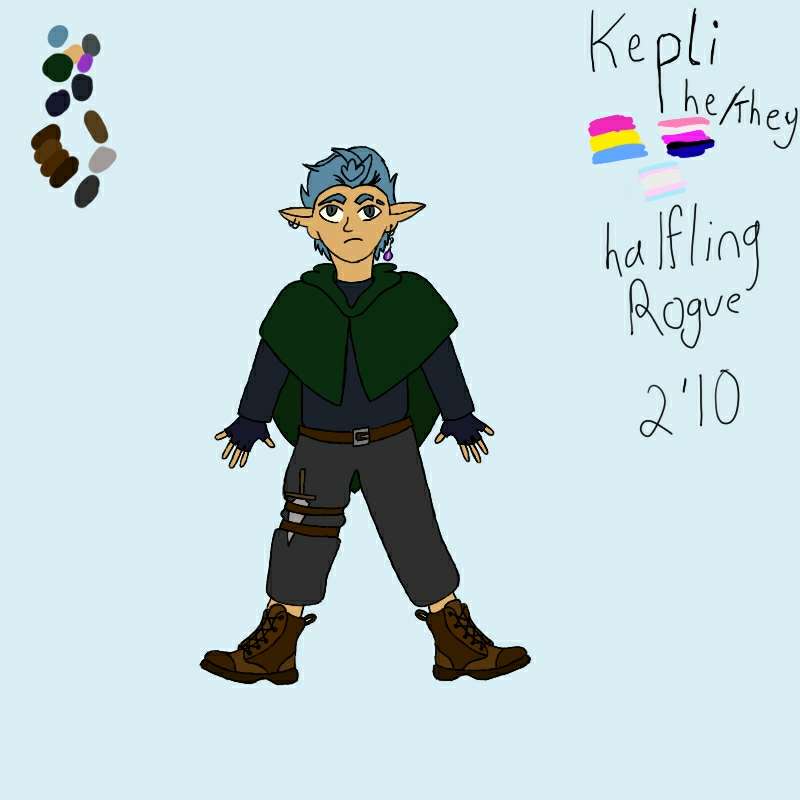
Erwood knew most of the party from school, but he got closer to the whole party during the three-year campaign. Getting closer to others was a lot easier in the game, he said.
“It’s a safe space to make social mistakes, ‘cause then you can be like, ‘Oh no, that was my character – that wasn’t me,’” he said.
Erwood didn’t know whether he had social anxiety when he was younger, but he recalled a middle school teacher who had pets in the class noticing how he spent more time with the pets than he did with students.
“Part of how I use D&D is learning how people interact,” he said. “I have a lot less social anxiety now than I think I did before.”
Running a campaign at KYC takes a little more attention than running one with friends, Sutton said. Sometimes it can be like “herding cats,” and players can be shy when they first start playing.
Sutton first started playing D&D when he was a shy 13-year-old. He’s able to get timid players to engage more by focusing on roleplaying rather than combat. He’ll see players’ give off “cues” when he introduces a story beat, and so he’ll try to entice them to open up and participate more.
“I’m very much a lore person. I like to roleplay, and so I will call you by your character’s name and be like, ‘Hey, what are you – this character – doing at this time?’” Sutton said.
In Erwood’s party, Sutton recalled how they had a habit of “queering” characters even if they weren’t meant to be LGBTQ+ originally. There was a character named Volo, a foppish bard with a distinct personality.
“They were like, ‘Oh, gay. Gay. Every friend he has is gay. No question,” he said.
Shaping queer identity
Eight years after the program began, D&D has cemented itself in KYC’s offerings and in the hearts of the players. A player’s father created a foam dice tower, and the table topper from Pride Gamers.
Sutton is now stepping away from the role of DM due to work commitments, but he’s supporting two volunteers who are interested in stepping up. He’s also developing a new nerdy activity by building decks for Magic: The Gathering, a competitive card game. Since the game has had more LGBTQ+ representation, he’s trying to create a deck for every letter of the queer acronym.
A previous staff member for KYC was a therapist who was using D&D as a therapeutic tool for players, Sutton said. That angle is being explored more in academia. This past summer, an Antioch University psychology graduate submitted a dissertation for their doctorate about exploring queer identity through tabletop roleplaying games.
Tabletop roleplaying gave Erwood the chance to experiment with his trans identity. He wasn’t out when he first started playing, but he recalled feeling that something was up with his gender a few months before playing. His character Kepli used different pronouns than the ones he was born with, and Erwood was able to experience what it was like to use them.
“That is how I convinced myself that I was in fact trans and not just lying to myself,” he said. “It felt really good.” 🔥
IGNITE ACTION
- To learn more about Pride Gamers of Columbus, click here.
- To learn more about Kaleidoscope Youth Center, click here.