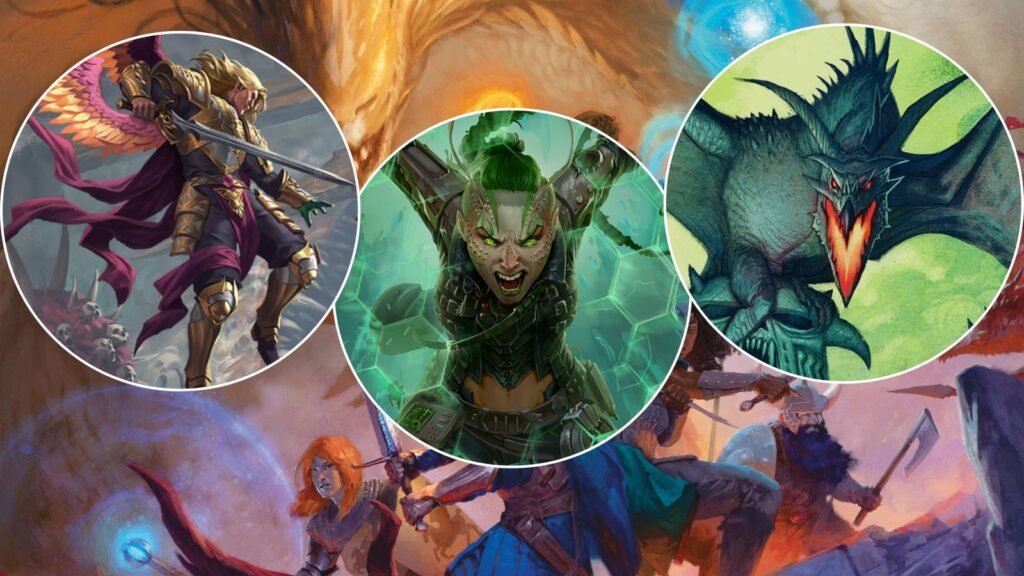
The TTRPG industry is big, and its biggest contributor is Dungeons & Dragons. As the biggest system out there, its name is likely the only one many people know when talking about tabletop games, being pretty much a synonym for the genre itself. But it’s not the only one.
Those who are more familiar with this space already know that, of course, but not everyone has tried other systems — if D&D works, then why bother, right? Well, while D&D is an amazing system, there’s nothing wrong with trying other options, whether it is to see how different rules handle similar situations, or to play something that goes differently than medieval fantasy.
10
Pathfinder 2e
For More Complexity

You’ve probably heard this one before: “You’re tired of D&D? You should try Pathfinder!” Still, there is truth to that, as the system is a really solid choice, especially if you think D&D is becoming too simple for you, and you want something more complex.
Based on D&D 3.5, Pathfinder is a bit heavier on the rules and mechanics, but because of that, you can pull off powerful characters and do more elaborate things on your turn. If combat is something that intrigues you in TTRPGs, it might be worth checking out.
9
Starfinder 2e
Pathfinder In Space

Since you’re already checking a few different and more elaborate rules to spice things up, why not change the setting altogether? Instead of staying in medieval fantasy, you can have some adventures in space instead.
Starfinder offers the same core game as Pathfinder, but adapted to a different scenario, along with adventures and lore to go along with it.
8
Daggerheart
For The Storytellers

Daggerheart is a bit easier for the players, which means it’s a solid pick for a power fantasy sensation, where your character gets to do things more consistently. But the combat isn’t the highlight here (even though it’s pretty good). The roleplaying is.
From rules as to how you know one another, to abilities that revolve around roleplaying and even teamwork, Daggerheart is one of the best current options in the market, and it’s definitely worth your time.
7
Draw Steel
Add Some Complications

Draw Steel is another perfect game for a medieval setting, where the scenarios won’t be too different from what you see in D&D, but the rule changes will make it very clear that you are, in fact, playing a different game altogether.
Draw Steel doesn’t offer the same complexity and crunchiness as Pathfinder, but its mechanics are worth checking out due to how versatile your character builds can be.
6
Dragonbane
For Games That Don’t Want To Be Serious

If you don’t like the focus on crunchiness, Dragonbane (from the original, Drakar och Demoner) might be a fun call. There are rules, sure, and this game in particular can be very deadly, but it’s a fun experience that is light on rules, and you don’t need to take it too seriously.
This idea even appears in gameplay, with things such as weird objects that can be used as improvised weapons, like wasp nests. Still, it’s fun to create a Suicide Squad of characters who may not survive the session, but will have a wild story to tell afterward.
5
Call Of Cthulhu
Less Action, More Horror

What if, instead of playing a game where the goal is to kill everyone, your character’s skills are far more grounded, and the goal is to just survive? Well, that’s the basic premise of a game like Call of Cthulhu.
Admittedly, this game plays very differently from D&D, so there isn’t much we can say these games have in common other than being TTRPGs. But sometimes, a completely fresh start is nice, even if said fresh start comes in the form of dread and horror.
4
Icons Assembled
For Super Heroics

Since we’re focusing a bit on different settings, an interesting one is Icons Assembled. Usually, when people talk about superhero TTRPGs, the one that comes to mind is Mutants & Masterminds, but we’ll change our recommendation here. Still, there are many superhero RPGs you can check out.
Our key reason is that, while M&M is interesting, its complexity and rules can be hard, making Pathfinder look simple in comparison. So, for a smoother experience, we recommend this one instead, which was even designed by the same person, Steve Kenson, but made to be simpler.
3
Powered By The Apocalypse Games
There Are Many Options

From the original Apocalypse World to Monster of the Week or even Avatar Legends, Powered By The Apocalypse isn’t a game, but rather a system of rules that serve as the basis for many different TTRPG games, meaning that, gameplay-wise, they’ll follow the same formula.
Imagine that each of these is a soulslike game — each game can be a very different scenario, but the core gameplay is similar, though the tabletop ones aren’t necessarily difficult, and more narrative focused. Still, whether you want to try different settings or something similar to D&D, the different system is a nice way to change the pace.
2
Star Wars
FFG Or Others

Star Wars needs no introduction. There are a few Star Wars RPG games out there, including one made by Wizards of the Coast, so there are a few ways you can venture into this galaxy far, far away.
Our top recommendation, though, would be the Fantasy Flight Games version of Star Wars RPG, the one often called Star Wars FFG. It might be confusing at first, given its dice and many books, but once you get the hang of it, you’ll get something that has similarities to D&D but also does many different things, including a system of success and failure that is similar to Daggerheart’s hope and fear in some ways.
1
Cyberpunk RED
Welcome To Night City!

Let’s stay in the sci-fi realm a bit longer. Many fans of the gaming community are likely aware of this series, thanks to Cyberpunk 2077 and even the Edgerunners Netflix series. So why not make characters in this world and explore Night City?
Here, you can have many grim moments in this hell of a city, with many different mechanics and experiences from D&D or medieval fantasy in general. Some stories can go a bit dark, but that’s what makes them special.
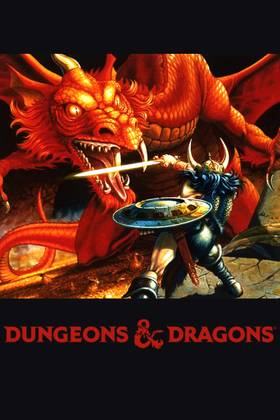
- Original Release Date
-
1974
- Player Count
-
2+
- Length per Game
-
From 60 minutes to hours on end.
- Age Recommendation
-
12+ (though younger can play and enjoy)
- Franchise Name
-
Dungeons & Dragons
- Publishing Co
-
Wizards of the Coast