There are few experiences quite like tabletop RPG games, aren’t there? Among the many options to play, one of the most popular is Dungeons & Dragons. It (usually) consists of classic medieval fantasy, where you make your characters venture through whatever hellscape the Dungeon Master prepared for you and have a great time with your friends.

Related
Dungeons & Dragons: Tips For A First-Time Dungeon Master
D&D is a classic fantasy tabletop role-playing game, but it is never too late to become a Dungeon Master.
Still, as you get used to the game, it’s tough not to metagame, even if subconsciously. Facing situations similar to those before, analyzing the DM’s behavior or rolls that seemingly don’t mean anything often triggers a sense in our mind that something is about to happen – and it usually does, to be fair, but it isn’t always the case.
10
A Closed Door
Locked Or Traps?

Few situations are as funny for DMs as a group being wary of a random door, checking for traps and ways to unlock it, even though no one has tried to simply open it and see whether it is locked in the first place.
It makes sense, to an extent; important locations will likely have locked doors, some of which may be locked with magic, and they could also have traps as security systems. Still, sometimes, a door is just a door.
9
A Treasure Chest
You Mean A Mimic?
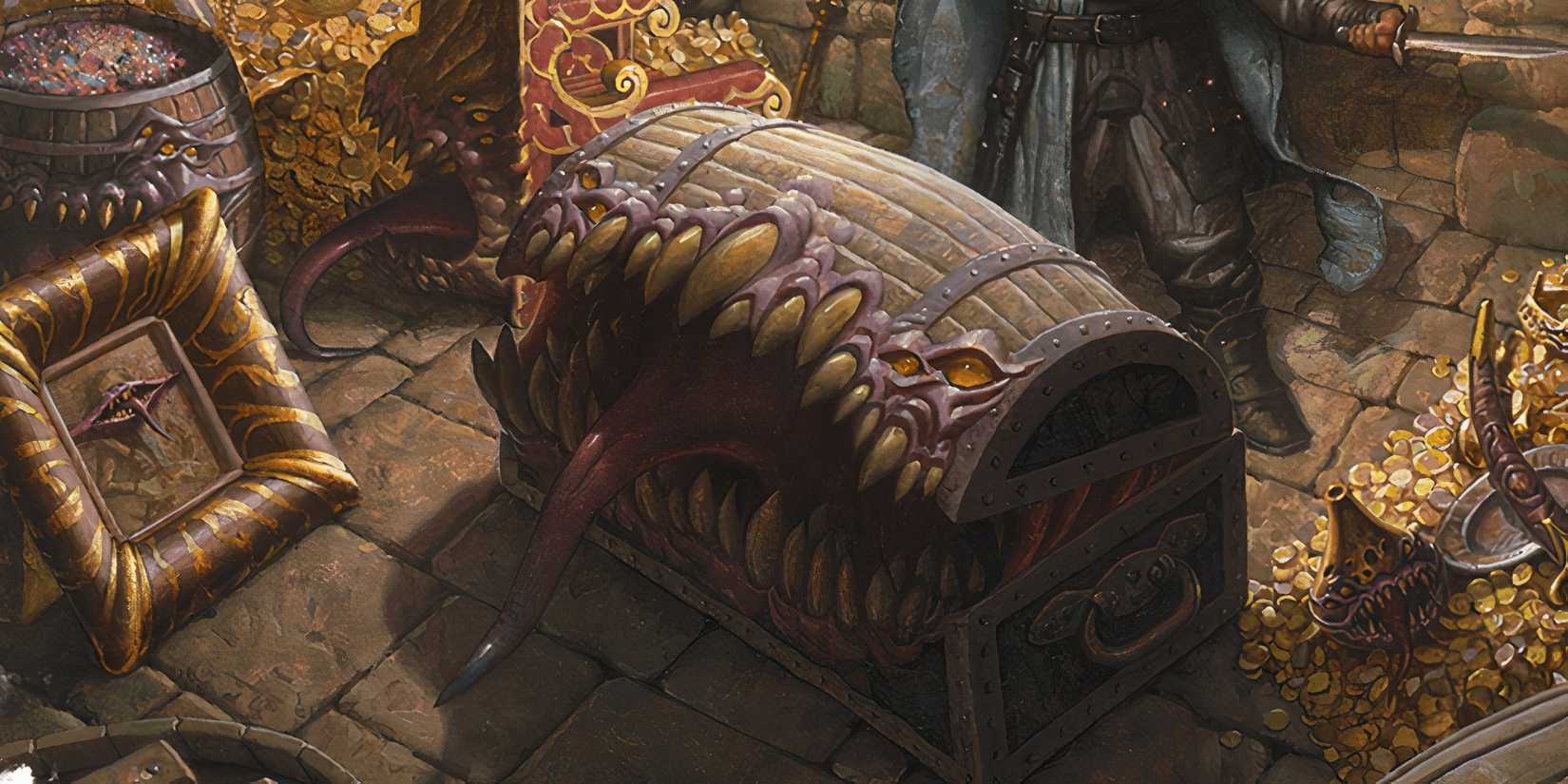
Speaking of traps, doors aren’t the only place for them. Treasure chests are also a common option to entrap players, as they’ll be curious about their contents. Though regular traps work well here, it’s also the perfect place for a mimic (though doors are also perfect mimics).
Whether the chest will be alive or the trap will be different, it’s only a matter of time for players to be overcautious about them and open them through Mage Hand. Still, just like our entry above, sometimes, a chest is just a chest.
8
A Random NPC Has A Name
That Means They’re Important

When players talk to an NPC you weren’t expecting, you’ll likely have to improvise a bunch of details, including the name they’ll inevitably ask. If you say a name that is too basic, like Bob, they might see you’re just improvising, and they’ll continue things as usual.
However, depending on the name that pops up in your head, the players might think this character is more than they seem, for better or worse. Whether that will be the case depends on how popular they end up being and whether you want to accommodate this character into the plot now, but still.
7
The NPC Is Friendly
Too Friendly…

Going a bit further on NPCs, there’s also the problem of a character being too nice for seemingly no reason. Sometimes, they’re up to something, but it can be other things, such as the character’s personality, players needing some extra assistance, and you’re using the NPC for that, etc.

Related
Dungeons & Dragons: 5 Tips For Running DMPCs
Join the adventure with an NPC run by the DM. Here are a few tips to help you run this situation.
Sadly, that level of suspicion can end up being deadly for this poor NPC who just wanted to help the strangers they ran into. Now, this group of people think they’re the BBEG in disguise or something.
6
The DM Smiles
We’re All Gonna Die

D&D is a group game designed to be a fun experience with friends, so laughter and enjoyment are expected. Even the DM will join in over the absurdity of the events happening. However, when the DM smiles and laughs alone, at random, it’s time to worry.
DMs know more about upcoming events than the players – they write the main plot, after all. Thus, any sudden changes in their behavior can be an indication that something bad is coming. Either that, or they just thought of something that made them laugh, and it’s a false alarm.
5
Statues/Armor/Bodies Are Lying Around
They’re Gonna Start Moving, Aren’t They?

Going back to the topic of traps for a moment, it’s also common for players to be wary of statues, armor, or anything that is humanoid-shaped, like a corpse. After all, it’s just a matter of time before they trigger something and they start moving, causing a fight, right?
That can be the case, even though not every monster is humanoid-shaped – an evil tree can be a nice trap that might catch them by surprise, for instance. Statues can also be there for what they’re intended to do: decoration. Armor can be there for the same reason, or it’s even a subtle reward for players who need better armor.
4
The DM Describes Something In Great Detail
This Is Definitely Important!

Of all the things we’re writing here, this one is the least likely to be a false alarm. If the DM takes a lot of time to describe a place, an object, a person, or even an action like combat, that means this moment is probably highly relevant to the campaign or, at least, to the session.
Still, there is the occasional moment where the DM gets in the zone and describes something with lots of details, even if it’s something mundane or irrelevant. Or they might be doing that ironically, adding up to a joke that just happened. Still, we recommend taking the described thing seriously since it’s probably important.
3
Poor Perception Or Insight Rolls
We’re Obviously Missing Something

Let’s face it; the sheer fact that the DM is asking for a Perception or an Insight roll is enough to make us suspicious. Why would they even be asking for this type of roll if everything is fine, right? This is why we recommend letting players decide when to roll these two, or at least Insight, since DMs may still wanna ask for Perception when called for.

Related
10 Dungeons & Dragons Rules You’ve Been Using Wrong Your Whole Life
Here are the best D&D rules players have been using wrong all this time.
Regardless, if they roll low, they might act like they were right all along after the DM says that they didn’t notice anything odd. If they’re saying no to a bad roll, that means they’d say yes to a good one, right? Well, not necessarily, but here we are.
2
A Magical Item Has Some Spotlight In The Story
It’s Cursed, Isn’t It?

We discussed the importance of thorough descriptions, so let’s delve deeper into moments where an object receives this treatment. Finding a magical item just lying around is likely an invitation to get someone in trouble.
Whoever touches it first will probably get a nice curse along with it, causing a series of complications related to the item as the party ventures forward. It’s a great narrative hook, so nothing wrong with making your character part of it, in the end.
1
The Fight Is Too Easy
Something’s Up

Fights are meant to be deadly challenges, especially if they involve a big boss from the story or simply if it is an overall important moment in the narrative. Thus, if the fight ends up being too easy, it’s likely a trap. Or is it?
DMs don’t like to admit this one, but sometimes we just screw up in balancing our encounters, thinking something is going to be hard, only for it not to be. Regardless of whether it’s planned or improvised, there’s nothing wrong with adding a second phase to spice things up.

- Original Release Date
-
1974
- Player Count
-
2+
- Age Recommendation
-
12+ (though younger can play and enjoy)
- Length per Game
-
From 60 minutes to hours on end.
- Franchise Name
-
Dungeons & Dragons
- Publishing Co
-
Wizards of the Coast