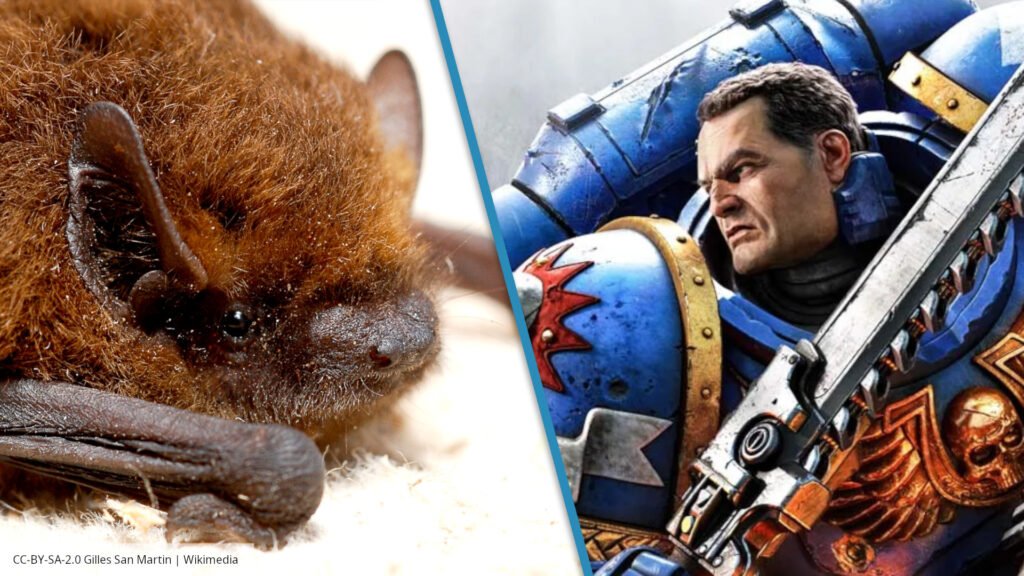
Games Workshop’s annual report for 2024-25 revealed the firm’s efforts to develop new facilities at its Warhammer World HQ in Nottingham, UK, are being delayed by a single tiny bat. According to CEO Kevin Rountree, a “cute looking pipistrelle bat” is delaying work on a new temporary carpark needed to accommodate an expanding workforce.
In recent years GW has increased its manufacturing capacity to meet rising demand for Warhammer 40k factions and hobby supplies, creating a new facility dedicated to making paint for miniatures, and starting work on a new dedicated packaging plant set to open in 2026. The firm needs more car-parking to meet the increase in staffing, and purchased a 31,000 square foot site park opposite one of its existing factories for $2.8 (£2.1) million.
Several laws protect bats in the UK. The Conservation of Habitats and Species Regulations 2017 mean it may be a criminal offence to deliberately capture, injure, or kill a bat, deliberately disturb one, or damage or destroy its breeding site or resting place (even if it’s not in occupation at the time). And the older Wildlife and Countryside Act 1981 means it can be a criminal offense to intentionally or recklessly disturb a sheltering bat, or obstruct access to any structure or place it uses to shelter.
Games Workshop’s planning documents for the new car park are available from the Nottingham City Council planning portal, and include an ecological survey of the grounds. The survey says that an old building on site has external features bats might nest in, though no evidence of nests. The survey gives recommendations on how to perform demolition in a bat-safe way, and gives the strict order that if a bat is discovered, demolition has to cease.
There are also recommendations on how to minimise the impact of construction floodlights on bats hunting near the building site, which is near to a canal, a good feeding site for bats due to the insects it attracts. GW’s annual report does not specify that the bat is roosting on site, or simply a regular visitor. Rountree states “we are carefully looking after the bat”. One planning document states that the new carpark will have twice as much habitable space for animals compared to the existing site, albeit working from a very low starting armount.
For those living in countries with more permissive construction regulations, these animal protection requirements may seem onerous. While England is a very green country, it has been densely populated by humans for a long time, and it is a nature poor country. Most of our green space is dedicated to farmland, with extremely low biodiversity compared to the native woodland and wetland that preceded it. Conservation laws exist to prevent Britain becoming more of a green desert and ending up like an agri-world in the Imperium of Man.
All of Britain’s apex predators are extinct, to the extent that deer populations can only be managed by culling. Predatory bird species are slowly recovering from the effects of now-banned DDT pesticide in the food chain. Some species that exist in Britain today, such as the European Beaver and the Red Kite, went extinct in the nation, and were only successfully reintroduced after protection laws and anti-pollution policies were introduced.
Who would win: Games Workshop, or a single tiny bat? Hopefully, both of them, and GW will be able to complete its work when the bat migrates seasonally. If you’re a fan of bats, conservation, or Warhammer, come and say hi in the official Wargamer Discord community.
Games Workshop’s annual report for 2025 had a lot more to say about the year, including some cryptic comments from CEO Kevin Rountree about the risk that ‘fear’ among the management team poses for the firm – check out our article on it here. And if you’re interested in bats in 40k, check out the section on the Night Lords in our guide to the Space Marine legions.