GHENT, WV (WVNS) – Dungeons and Dragons is a name most people have heard, even if they haven’t played it. When the 4th edition of Dungeons and Dragons released, it represented a pretty major change in the game’s design. While some players did like it, a lot of players simply decided to continue playing the existing edition: Dungeons and Dragons 3.5.
D&D 3.5 came out in 2003 as an update to the popular D&D 3.0 ruleset that came out in 2000. The third edition of Dungeons and Dragons also came with the release of the Open Gaming License, which was a license that essentially allowed third party publishers to create content compatible with D&D 3.0. As you can imagine, the Open Gaming License, or OGL as it is generally called, meant that the third edition of D&D ended up having a wealth of community driven content.
What is Dungeons and Dragons 5th Edition?
What does this all have to do with Pathfinder 1st Edition you might ask? Well, when D&D 4th Edition came out, quite a few players stuck with the older 3.0/3.5 rules. This is where Paizo came in with Pathfinder. Designed to be backwards compatible with existing D&D 3.0/3.5 content, Pathfinder 1st Edition is an iteration on the 3.0/3.5 rules that was made possible in large part because of the OGL.
Pathfinder 1st Edition came out in 2009 with the release of the Core Rulebook. To anyone who had played a lot of Dungeons and Dragons 3.5, the system was remarkably familiar, although it did have some significant changes when you get down to the details. Still, the differences were small enough that it was easy to pick up.
What the heck is a tabletop roleplaying game?
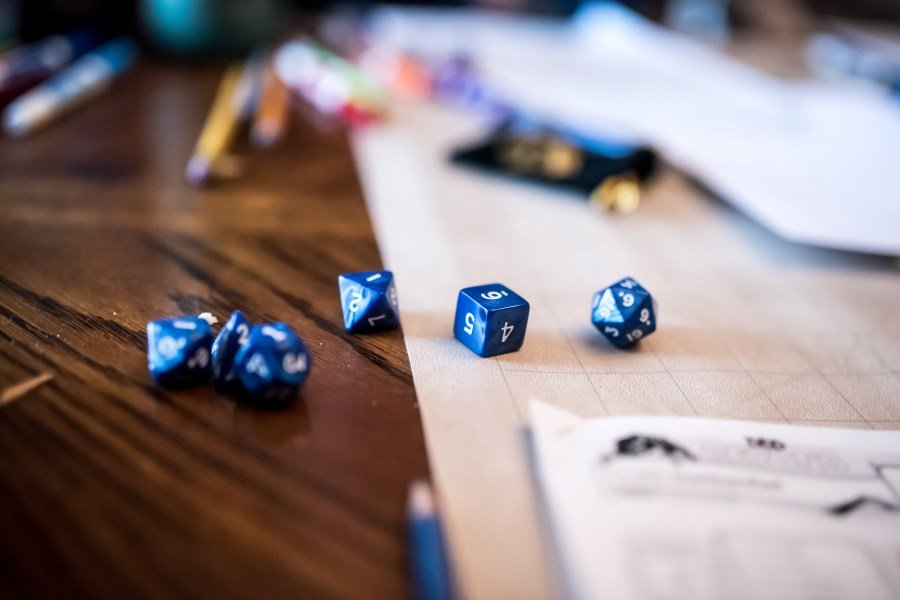
Just like Dungeons and Dragons, Pathfinder 1st Edition uses the venerable d20 system. The success or failure of actions is determined by rolling a twenty sided die and adding any appropriate modifiers before comparing it to a difficulty class (or DC). In addition to new content, classes, adventures, and other materials, players were able to draw on the wealth of published content for D&D 3.0/3.5 as well, due to how easy it was to convert those to Pathfinder 1st Edition.
System wise, it is significantly crunchier than D&D 5th Edition, with a lot more modifiers to add and subtract from your rolls and of course a nearly overwhelming array of options when it comes to classes, feats, spells, and other player choices. This can definitely be intimidating to a new player, but if you stay focused on what you’re trying to do with your character, it will help a lot. Those options of course have a positive side effect too – pretty much any fantasy character concept you can come up with, there’s probably a way to make it work in Pathfinder.
Classic World of Darkness, a trip back to the 90s
While Pathfinder 1st Edition has been replaced by Pathfinder 2nd Edition in terms of official releases, the first edition of the game still has a robust community of players who continue to enjoy it even nearly 20 years after its initial release.
Copyright 2026 Nexstar Media, Inc. All rights reserved. This material may not be published, broadcast, rewritten, or redistributed.
For the latest news, weather, sports, and streaming video, head to WVNS.