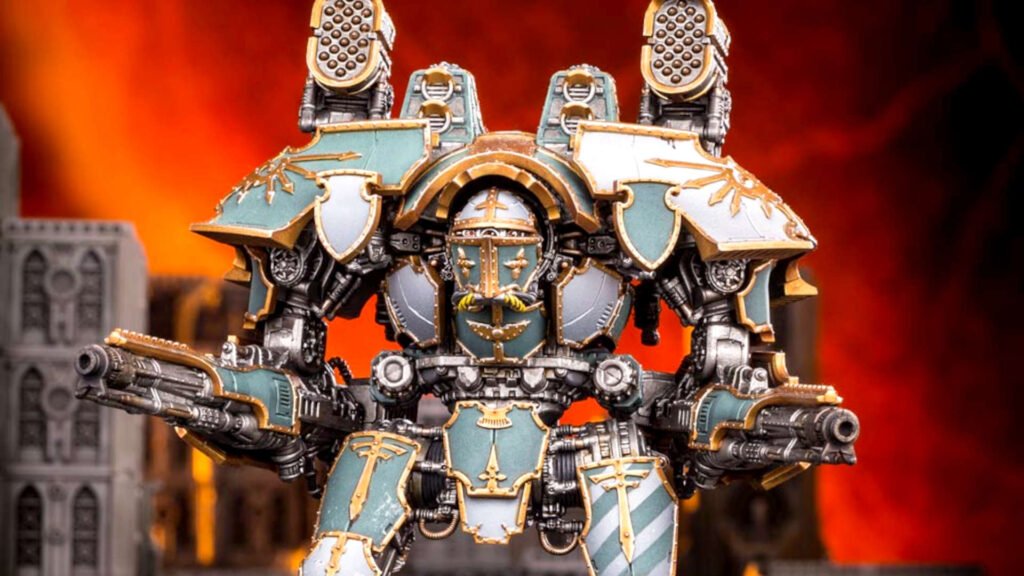
Just like Heinz means ketchup, Warhammer 40,000 is the first – and often last – name that comes to mind for most people when they think about miniature wargames. It’s not so much that the firm has a monopoly over this subsection of the tabletop gaming hobby, as that it created it. Myriad marvelous games might clamor for wargamers’ attention, but make no mistake – the only company that Games Workshop needs to worry about is Games Workshop.
Now there are external factors that could ruin GW’s day. The price of polystyrene could go up so much that making more plastic soldiers for the Space Marine legions becomes utterly uneconomical. Another pandemic could annihilate global supply chains for longer than GW can afford to pause its operations. But that’s a category of external risk that, although it would ruin Warhammer 40,000, would flatten the rest of the industry as well.
But GW will not be threatened by a rival tabletop company, be that a startup, or heavy investment from an established business like Asmodee or Bandai. GW’s head start is so commanding that if the rest of the hobby gaming industry vanished, it could still continue to operate. Uniquely, GW has direct control over nearly every stage of its business; product development, plastic miniature manufacturing, distribution, global business to business and direct to customer marketing, and retail.

This is vertical integration, and no other company in the miniature wargaming market has done it so extensively. Asmodee has global sales and distribution, and thanks to Atomic Mass Games it designs miniature wargames, but it relies on Disney for IP and Chinese partners to manufacture its models. Most other plastic kits are made either at Archon Studio or Renedra in Europe, Wargames Atlantic in America, or in China. When Bandai launches its Gundam wargame it will own the IP, have in-house design and plastic manufacturing capability, as well as a highly developed sales team, but it doesn’t contain a distributor. And nobody else has a chain of stores.
The value of vertical integration comes from controlling costs. When the retailer, wholesaler, publisher, and manufacturer of a product are all the same entity, the profit stays with one company instead of getting split four ways. And when those businesses are all focused on a single objective, they can become very efficient at what they’re doing, driving profits higher.
Comparisons between GW and most other wargames firms simply don’t apply – it’s more like a whole collection of businesses than a single business. But this sheer scale creates vulnerabilities. For a start, if you’re as big as four businesses, you have the costs of four businesses – which means you need the revenue to match.
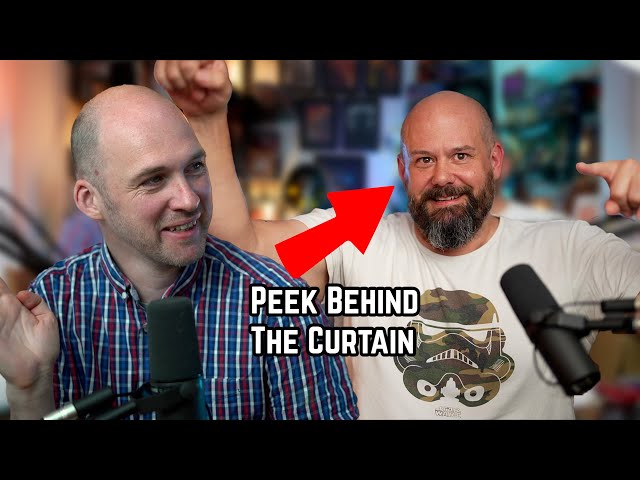
This has created problems for GW before. In the video above, senior hobby products designer Tom Hibbard recounts how, between 2014-16, the firm came dangerously close to shutdown as a result of a cashflow crisis. Management meetings identified that the firm had failed to keep on top of new player recruitment, and there weren’t enough newcomers entering the hobby to feed the beast.
Containing multiple businesses also opens the firm up to multiple kinds of vulnerability. During its big ’90s expansion, GW invested heavily in leasing retail locations in malls and UK high streets. It was a fantastic strategy until the e-commerce revolution took off in the ’00s and in-person retail began to decline. GW had to carry those unprofitable leases directly – a risk it would not have been directly exposed to if it didn’t contain a retail arm.
An integrated business is also particularly susceptible to management blunders; if one part of the business makes an error, everyone pays. In 1998, GW bet the farm that it could sell a fanciful number of copies of the Ork-themed wargame Gorkamorka. That didn’t happen, and the whole company suffered as it had to tighten its belt. If there had been a separate manufacturer, game design studio, distributor, and retail chain, no one firm could gamble with the resources of the other three, and the pain of failure would have been localised in whichever company made the fatal error.
GW bounced back from every one of these snafus – not always in the same shape as before. But I imagine this is what occupies Kevin Rountree’s thoughts. Not the possibility that anyone could beat Games Workshop – but the risk that Games Workshop could fail all the same, a giant tripping over its own toes.
Do you know of any major business blunders in the tabletop gaming world? As you can probably tell from this article, I do like to overthink this side of the industry – please come and share your thoughts in the Wargamer Discord community.